ESB International to Deliver Oracy Workshop with the English Association
ESB International is delighted to be partnering with The English Association to deliver a workshop on Thursday 21st May, led by ESB International’s Senior Assessor for Oracy. The session will explore how authentic speaking scenarios can support the explicit teaching of key communication skills in the primary classroom.
The session will focus on how teachers can create talk opportunities that feel relevant, realistic and reflective of learners’ real lives. By anchoring spoken language tasks in authentic contexts, learners gain greater agency in their communication and develop confidence, identity and stronger classroom relationships.
Oracy sits at the heart of ESB’s mission to build confident, effective communicators, and this workshop will offer practical guidance grounded in our long-standing expertise in spoken language assessment.
Exploring Authentic, Purposeful Classroom Talk
Drawing on examples from ESB’s Primary Oracy qualifications, the workshop will demonstrate how real‑life communication activities can be combined with the explicit teaching of discrete communication skills, including:
Voice
Structure
Pace and Pause
Gesture
Emphasis
Active Listening
These skills underpin effective communication and support progression in speaking and listening across the primary years.
Practical Ideas for Classroom Application
Participants will leave with a range of strategies for designing purposeful talk tasks that help pupils develop:
Confidence in sharing their ideas
Clarity in structuring and presenting information
Effectiveness as speakers and listeners
The session will also explore how classroom talk tasks can be thoughtfully sequenced to support ongoing development throughout a child’s primary journey.
Who Should Attend?
This webinar is designed for:
Primary school teachers
English subject leaders
Literacy coordinators
Trainee teachers and teacher educators
School leaders with an interest in oracy and spoken language development
By the end of the webinar, attendees will:
Understand what makes a classroom talk task meaningful and authentic
Know how to teach discrete communication skills through purposeful, real‑world speaking scenarios
Take away ideas for designing talk tasks that help pupils progress in speaking and listening across the primary years
Whether you are looking to strengthen your school’s oracy provision or seeking new approaches for encouraging confident communication, this workshop will offer practical insight and inspiration.
Book Your Place
We invite colleagues passionate about supporting pupils’ spoken language development to join us for this engaging and practical session.
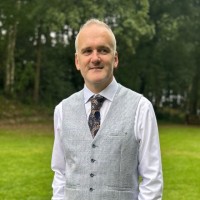
English Speaking Board (International) Ltd. welcomes its new Chief Executive, Adrian Gallagher
English Speaking Board (International) Ltd. is delighted to announce the appointment of Adrian Gallagher as our new Chief Executive. Adrian brings a wealth of experience, vision, and leadership to the organisation, marking an exciting new chapter in ESB International’s journey.
Adrian is a strategic and results-oriented executive with over two decades of experience in education technology, business growth and operational leadership. His career has been defined by a commitment to innovation, excellence and sustainable development within the education sector.
In his most recent role, Adrian oversaw the strategic and operational management of the organisation, driving growth and performance. Under his leadership, the group expanded into more than 40 international regions, including the UAE, the United States, India and Australia. This expansion not only strengthened the organisation’s global presence but also enhanced its sustainability and charitable activities.
Adrian has previously held senior leadership positions across other education, employability and training sectors, consistently delivering outstanding results and building high-performing teams. His leadership style is characterised by integrity, innovation and a commitment to excellence in every aspect of organisational development.
I am truly honoured to join English Speaking Board (International) Ltd. as Chief Executive. ESB International has a proud history of empowering learners and fostering confident communication, and I am excited to play my part in continuing this legacy. My focus will be on driving innovation, expanding our reach, and ensuring that ESB International delivers exceptional value to its learners and partners worldwide.
I am grateful to Jim McAtear and the Board of Trustees for their trust and support as we embark on this exciting journey together and would like to place on record my sincere gratitude to my predecessor, Tina Renshaw, for her outstanding leadership and dedication to ESB International over the years.
Adrian Gallagher on becoming the new CEO of ESB International
On behalf of the Board of Trustees, I am delighted to welcome Adrian Gallagher as Chief Executive of English Speaking Board (International) Ltd. Adrian’s extensive experience and proven leadership in the education sector make him an excellent choice to guide ESB International into the future. We look forward to working closely with him as he leads the organisation to new heights as both an awarding and charitable organisation.
Jim McAtear, Chair of the Board of Trustees, welcomes Adrian to ESB International
Adrian’s appointment signals a bold and progressive future for ESB International. His proven track record of driving growth and fostering innovation aligns perfectly with our mission to empower our learners through our aspirational Oracy and English Language qualifications and develop confident communicators worldwide.
It is with grateful thanks and sadness that we mark the passing of a wonderful colleague, Friend and Fellow of ESB and former Trustee. I asked her friends and colleagues to join me in sharing some of their thoughts of Shelagh and I offer them here to demonstrate the breadth of impact and connection she had with and for so many.
Shelagh was a legend! Someone who made an outstanding contribution, not only to the English Speaking Board, but to all the various people and places where she lived and worked over the years.
I was fortunate enough to know her for over 60 years; but well before that she began her Teacher Training in Derby. She initially worked in the docklands in Liverpool, teaching poor children in a deprived area where there was extreme poverty, extreme cold and poor living conditions. I remember being amazed to learn that these children had to be sewn tightly into their clothes. This was to provide insulation and keep them warm; also prevent infection from lice. Sometimes paper and goose fat were even added to layers of clothes to ensure warmth.
Shelagh later moved with her husband Jim, an architect, to Pershore in Worcestershire and later to their lovely home in St. George’s Square, Worcester. She inspired candidates of all ages from pre- Kindergarten to Retirement age and beyond. Her wonderful sense of humour was always present – something that captivated us all, young and old. She examined the whole range of Schools syllabuses, plus those for Colleges of FE; also Seminaries e.g. Allen Hall, London where young men were in training for the Ministry, using the Readers and Leaders in Places of Worship syllabus. While at Worcester Technical College, she taught Communication Skills to Building students and Catering students plus other sectors. She was passionate about this work, keen to pass on better communication skills to these young people to help them forge careers, and it was now that she began to publish her text books on the subject, a series of very successful text books followed.
In both written communication and in the field she showed calm wisdom, tact, warmth and integrity. She was also renowned for her wonderful wit and skilled story-telling and a great talent for friendship. She kept us all happy!!
She will be remembered by all with huge respect, admiration and love for many years to come.
Jeannie Martin, Friend and Colleague
Brilliant, bawdy and benevolent, that was Shelagh. The first time I met her was outside the Globe Theatre for an ESB Conference. She greeted me in that beautifully modulated, carrying voice as if we had been friends for ever – the years would make sure that was true – then promptly cornered me into taking over from her as newsletter editor. She had endless anecdotes and completely unexpected raunchy jokes, as well as a piercing wit and a wicked line in mimicry. Her flawless slide into all and any accents got her in trouble once with a Welshman who complained to ESB about her ‘cultural appropriation’. Combine those with an invaluable total recall over so many years of ESB’s growth and development – Shelagh was unique. What a loss.
Lesley Cook former CEO of ESB
There will be many people at ESB who knew Shelagh longer than I did but I remember first being aware of this very knowledgeable leader at training when I was a new assessor in 2009. She was so willing to share her enthusiasm and experience with all and I learned so much from her.
I was very lucky to be invited to join a lunch group of ESB assessors who live in my area and Shelagh was one of the founder members. Shelagh was undoubtedly the leading light in the group with her sparkling wit and her, at times, outrageous jokes. She told wonderful anecdotes and had us roaring with laughter.
Shelagh made a big impact on all who met her and I shall certainly cherish the happy memories I have of time spent with her.
Sheila Hendy
For me as CEO of ESB for nearly a decade, Shelagh forms a pantheon of former Trustees whom we have lost, along with Richard Ellis and Avril Newman that embodied the phrase “only connect” which was central to the founding philosophy of Christabel Burniston MBE and Jocelyn Bell. I only had the privilege of knowing Shelagh personally for five years and whenever she called me she expressed her gratitude for me taking her call in my busy role. Yet it was I who was grateful to her for showing such continued passion, open mindedness, friendship and interest in the evolution and progress of the organisation she held so dear.
She also showed love and friendship as she would often ask after my father, who sadly too passed away this year as well as her constant concern for our President Merriel Halsall-Williams. I have always known that to lead ESB was to stand on the shoulders of giants, Shelagh was undoubtedly talented, quick witted, engaging and purposeful and for a huge part of her life ESB benefitted from her gifts of teaching, writing, assessing and mentorship.
Thank you Shelagh, may you rest in peace.
Tina Renshaw Former Chief Executive of ESB International
ESB International responds to Curriculum and Assessment Review
English Speaking Board (International) Ltd. (ESB International) welcomes the publication of the Government’s Curriculum and Assessment Review and its recognition of oracy as speaking, listening and communication, encompassing verbal, non-verbal and alternative forms such as sign language and Alternative and Augmentative Communication (AAC).
ESB International has been an oracy leader since 1953 and we are thrilled to see the review’s position that oracy is a vital skill for learning, employment and life, as well as the review’s call for more coherence and guidance to support good practice across all phases of education, including post-16.
1. An Oracy Framework
The recommendation to introduce an oracy framework alongside those for reading and writing is a significant and positive step. At ESB International, we have consistently seen the benefits of structured opportunities for pupils to plan, practice, perform and reflect on their spoken communication. Our collaborative research with Whitgreave Primary School, published in the Chartered College of Teaching’s Impact journal, found measurable progress in learners’ confidence, prosody and active listening skills (amongst others) when oracy was taught and assessed in a deliberate way.
Our external assessment model was recognised by the Oracy All Party Parliamentary Group’s Speak for Change report (2021, pg. 43) as an established framework for oracy assessment. Our oracy qualifications, available from Early Years all the way through to adult learners and accredited at Level 1 and above, assess learners with consistency and fairness, while preserving the authenticity of live and varied communication, providing teachers and learners with impartial feedback while celebrating a wide range of strengths and styles. We welcome a future framework that recognises spoken language as equally significant to reading and writing, reflecting the principles that have long underpinned ESB International’s approach.
I think this has given them the chance to realise they do have knowledge… and what they have in their head is also just as important being spoken as it is written.
A quote from the lead teacher at Whitgreave Primary School
2. Oracy within 16-19 Education
The review also notes that current opportunities to develop communication, teamwork and leadership in the post-16 phase are uneven. We welcome this recognition. Strong spoken communication is central to learners’ confidence as they prepare for work, further study and independent living.
ESB International’s experience working with sixth forms and colleges shows that externally assessed communication qualifications can provide valuable evidence for the practical, interpersonal skills young people develop in this phase. ESB International’s Oracy assessments encourage reflection, dialogue and adaptability, skills identified in the review as increasingly important for future-proof employability. We believe that oracy offers a potentially game changing pathway for learners who struggle with traditional English resit pathways, with enjoyable assessments grounded in real-world communication and with a strong focus on employability.
Holly Lodge High School College of Science’s sixth form have been taking our Level 3 oracy assessments since 2021 with great success, qualifications that carry UCAS points.
We look forward to contributing to the wider conversation about how oracy can be meaningfully embedded within 16–19 routes, ensuring that all learners have opportunities to develop and demonstrate their critical thinking, leadership, and communication skills.
3. an Inclusive Understanding of Oracy
We are particularly pleased to see the review adopt an inclusive definition of oracy that recognises non-verbal communication, sign language and Alternative and Augmentative Communication (AAC). This definition reflects the diversity of learners’ voices and aligns with assessment approaches grounded in universal design, a principle long embodied by ESB’s qualifications.
We are passionate about enabling learners with a range of communication profiles to access oracy education and qualifications that reflect their strengths and their authentic voices. Our ‘Building Confidence in Communication’ suite of qualifications, for example, designed specifically for 16+ learners with significant learning needs offers adaptable pathways that recognise every form of communication as meaningful and valuable.
By embedding these inclusive principles across our wider portfolio, ESB shares the Review’s vision of ensuring that every learner regardless of background, ability or mode of communication has the opportunity to develop, demonstrate and be recognised for their voice.
Thank you to the Oracy Community
This moment belongs to a whole network of advocates, researchers and practitioners who have worked tirelessly to raise the status of oracy. We extend sincere thanks to:
The Review’s Chair, Professor Becky Francis CBE, the expert panel and contributors for foregrounding oracy in a world‑class curriculum, and to DfE for accepting the framework recommendation.
The Oracy APPG, its Chair Emma Hardy MP, its officers and all contributors who fed evidence into the final report.
Our founders Christabel Burniston MBE and Jocelyn Bell who in 1953 as innovators and educators created a form of Oracy assessment experience that was so valuable it has been able to bend and flex over that time as our society has changed and whose value today has been validated by the positioning of Oracy in this curriculum and assessment review.
The schools and colleges who have been innovators themselves and given children and young people an opportunity to have an Oracy education with ESB International.
Together, we can ensure that the framework becomes more than a document, that it lives in lessons, empowers every learner and strengthens the social fabric of our classrooms and communities. ESB International stands ready to support the development of the framework and offers its skills to the Department for Education.