Author: Liam Morton

  • ESB responds to the Oracy Education Commission’s Report: Boosting learners’ Oracy and Employability skills through our Communication-Rich Experiences

    In response to the Oracy Education Commission’s recent report, “We Need to Talk,” English Speaking Board (International) Ltd. (ESB) has a strong focus on the role of oracy education in enhancing employability and essential workplace skills.

    The Commission’s report, titled “We Need to Talk”, underscored the critical role oracy plays in preparing young people for future challenges, particularly in the workplace.

    “Spoken communication and interpersonal skills are highly valued and in demand by employers. They consistently top the list of skills demands yet they emerge as one of the biggest skills gaps in the school leaver and graduate workforce.”
    (pg. 34 – ‘We Need to Talk’ Oracy Education Commission’s Final Report)

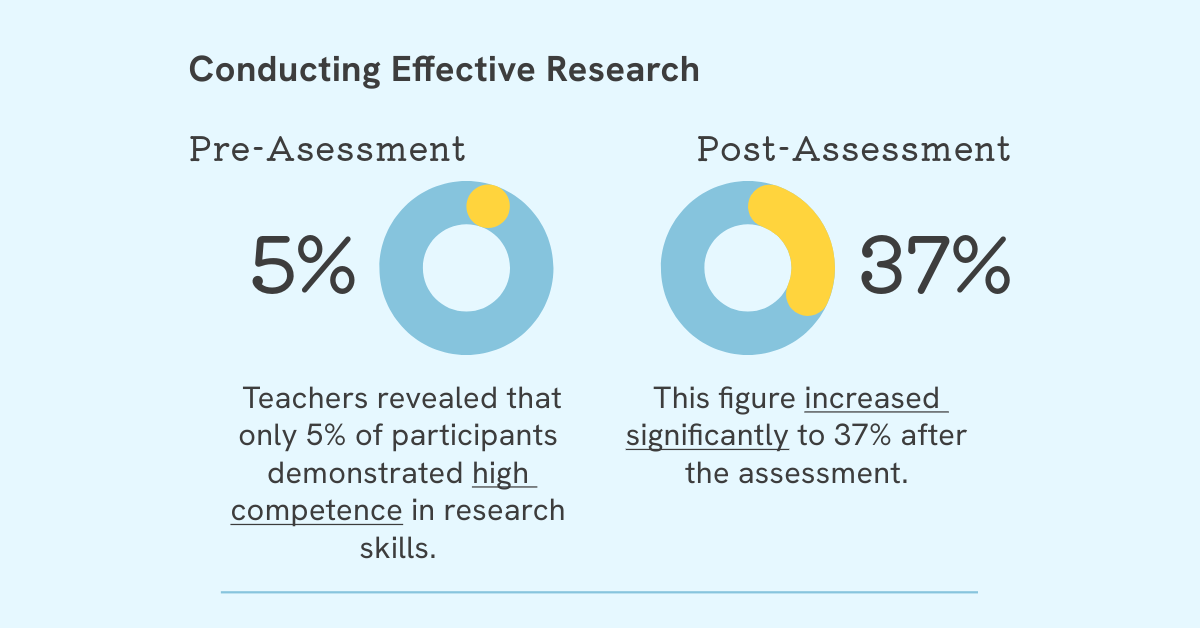
    ESB’s Impact Data identifies that learners who complete its qualifications demonstrate significant improvements in their speaking and listening skills.

    Teachers were asked to rate how much they believe ESB qualifications have helped develop these skills, particularly in response to challenges posed by the pandemic. On a scale of 0-10, the average rating was an impressive 8.6.

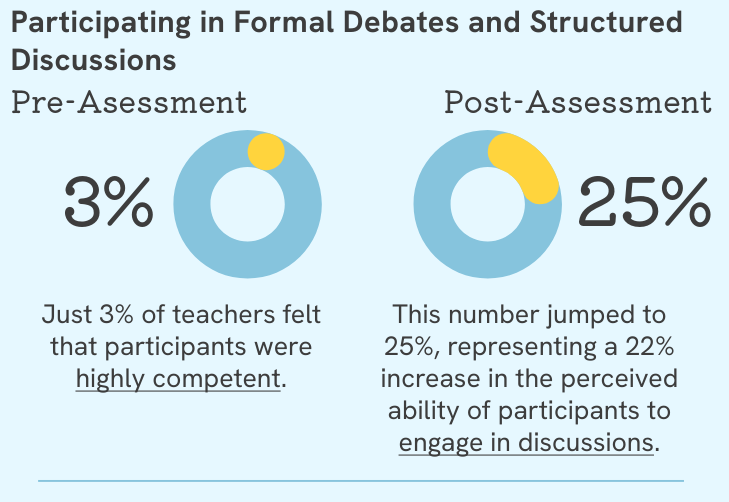
    Furthermore, teachers observed a 29% increase in learners who were highly competent in “speaking confidently, audibly, and fluently” after completing their ESB qualification.

    Says ESB’s Chief Executive, Tina Renshaw:

    ESB’s employability-focused oracy qualifications, which are externally assessed and carried out in peer groups, play a crucial role in developing young people’s speaking and listening skills by creating real-life communication-rich situations. In particular, preparing for and experiencing an ESB qualification fosters learner agency and empowers young people to find their place in the world.


    Our ESB Level 1 Award in Speech for Employability (Grade 2) and Level 2 Certificate in Speech for Employability (Grade 4) provide learners with the opportunity to develop key skills that directly translate to workplace success.

    Key Features of ESB’s Oracy Employability Focused Qualifications

    Practical, Real-Life Assessments
    ESB’s Speech for Employability qualifications are designed to immerse students in real-world scenarios, including presentations, mock interviews, formal telephone calls, pitches and listening and responding to views. These activities enhance learners’ communication skills, preparing them for job interviews and workplace challenges. Preparing for these qualifications fosters teamwork, problem-solving, leadership, group speaking and collaboration in a supportive environment.

    Building Confidence
    The Oracy Education Commission report emphasised the importance of building young people’s confidence in speaking situations. ESB’s qualifications are designed to do exactly that, and our research from our National Impact Report 21-22 has shown that there is a significant improvement in students’ self-assurance post-assessment. Carried out in small groups, ESB assessments helped many students who initially felt anxious about speaking in front of others to emerge with newfound confidence – a key employability trait identified in the report.

    Employability Focused Oracy Teacher Resources
    ESB offers a wide range of online teacher resources for our Oracy qualifications, which teachers can access free-of-charge, at any time. We have resources specifically designed for our employability-focused oracy qualifications.

    Tangible Improvements in Employability Skills
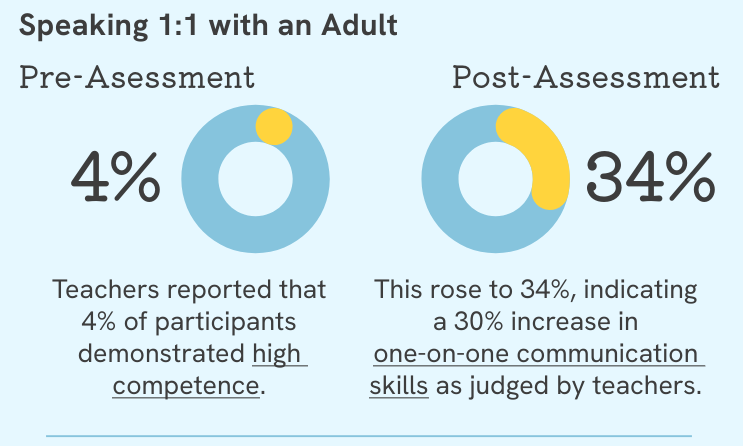
    ESB’s research from its National Impact Report 21-22 demonstrates the powerful impact of these employability based qualifications. Following the assessments, 34% of students were rated ‘Highly Competent’ in professional one-on-one interactions, a vital skill for job success. Additionally, over 70% of learners reported improvements in their ability to deliver talks on job-related topics, addressing the Commission’s concerns about students’ readiness for professional life

    Learner-Centred Approach and Agency
    The Oracy Education Commission advocates for empowering students with ownership over their learning, a principle that is at the heart of ESB’s assessments. By allowing learners to choose their presentation topics and engage in discussions about jobs, careers, successful business leaders that interest and influence them, ESB assessments nurture learner agency. This approach not only motivates students but ensures the learning experience is relevant to their future aspirations, aligning with the report’s call for integrating oracy meaningfully across the curriculum.


    Data from ESB’s National Impact Report

    Teacher and Learner Testimonials

    Teachers have praised the impact of ESB’s assessments on their students. One teacher commented:

    Students who are usually quiet or reluctant to speak gained so much confidence. They all expressed confidence in completing interviews or professional conversations in the future.


    Learners have echoed this sentiment, with one stating, “The best part was the interviews as it gives me a view of what we would have to do in the real world.

    Find out more

    In light of the Oracy Education Commission’s findings, ESB is committed to expanding opportunities for young people to develop essential oracy, employability and lifelong skills.

    Adds Tina, “By embedding real-world scenarios into its qualifications, ESB not only equips students with the oracy skills needed for the workplace but also instils the confidence and agency required to thrive in their future jobs and careers.”

    You can read more about the impact of ESB’s external, employability-focused oracy assessments on Key Stage 3 learners in the following article published by ESB in the Chartered College of Teaching’s peer-reviewed journal by clicking here.  Additionally, you can read ESB’s National Impact Report here.

  • ESB launches its ‘Oracy for All’ Campaign to help empower learners with significant learning needs to achieve with its ambitious and inclusive Oracy qualifications

    Research indicates that 80% of learners with special educational needs and disabilities (SEND) experience anxiety and face significant challenges with social interactions and future independence. Without strong communication skills, these individuals risk isolation and limited opportunities in both education and employment. (Report by the Children’s Commissioner for England)

    At ESB, we support all learners to develop their Oracy skills and over the next five weeks we’re going to showcase how we support learners with significant learning needs to do just this.

    English Speaking Board (International) Ltd. (ESB) is proud to announce the launch of its new campaign, “Oracy for All,” designed to empower learners with significant learning needs to achieve with its ambitious and inclusive Oracy qualifications. 

    This exciting five-week campaign will feature a series of engaging videos that highlight the critical role of oracy – the ability to express oneself and communicate effectively – in fostering confidence, independence, and life skills for learners with significant learning needs.

    Each week will focus on specific themes, including the power of Oracy, Oracy for independent living and social interaction and Oracy for education and employment.

    This initiative aligns with the recent Oracy Education Commission’s report, “We Need to Talk,” which highlights the importance of inclusion in oracy education. You can read more about our response to the report here.

    ESB’s Chief Executive, Tina Renshaw says:

    At ESB, we believe that developing effective oracy skills is a fundamental right for everyone. For over 70 years, our mission has been to unlock the potential of children and young people through their speaking and listening skills. Our oracy qualifications are for everybody – they’re ambitious and inclusive, but we know some of our learners with significant learning needs in specialist provision require additional support. These remarkable individuals deserve equal opportunities to access life-changing oracy skills.

    That’s why we’ve developed qualifications specifically for this group of learners, enabling them to thrive and flourish with real-world confidence-building, communication-rich opportunities and experiences which result in an ESB Ofqual Regulated qualification. Over the coming weeks, insights from learners, schools, colleges, assessors and experts will be shared to showcase the transformative impact of ESB’s Oracy qualifications.


    Join Us in Promoting Oracy for All

    Educators, parents, and SEND specialists are encouraged to join ESB on this journey to ensure Oracy for All. Whether you’re a specialist school interested in registering for ESB qualifications or a parent looking to support your child’s communication development, this campaign will offer valuable insights, resources and practical solutions.

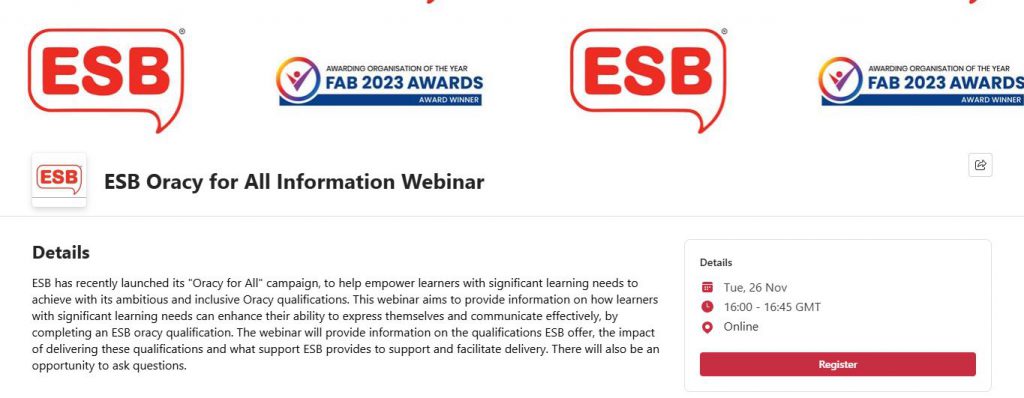
    Be sure to join our webinar on Tuesday, 26th November, at 4.00 pm for an in-depth look at how these qualifications can make a real difference to the lives of individuals. 
    For more information about ESB’s qualifications and to register your interest, please click here.  

    If you are unable to attend the webinar and would like further information, please contact our Business Strategy Team via business@esbuk.org. We would be delighted to hear from you. 

  • Notice to Centres: change to ESOL Skills for Life Entry 3 Writing Assessment

    Following a review of our qualifications and feedback from our centres, we are increasing the time allowed for ESB Entry Level Award ESOL Skills for Life (Writing) Entry 3) from 60 minutes to 70 minutes. This is to ensure that learners can plan, write and review their responses in the time provided, and takes effect immediately, for all Entry 3 Writing assessments from October 2024.

    We have therefore issued a new version of the Entry 3 Writing specifications to update the time permitted to 70 minutes. We have also issued new versions of the Reading and Writing specifications at all levels, with some additional information on the punctuation that is expected at each level. The Specifications and sample papers are on our website here https://esbuk.org/web/our-teacher-resources/esol-skills-for-life-resources/ .

    Change to the safeguarding procedure for learners under 18 and vulnerable adults

    From October 2024, the member of staff who is in the assessment room with learners under 18 and vulnerable adults will stay for the whole assessment, including the listening section. Centre staff in the assessment room may not take notes or participate in the assessment, but must be present at all times when assessors are with young people and/or vulnerable adults.

  • Notice to Centres: revised specifications for ESB Level 3 Certificate in Speech (Grades 6 & 8)

    Notice for all ESB Speech UK and International centres:

    Following a review of our Level 3 Speech qualifications, we have made some changes to the grade descriptors at Grade 6 and Grade 8. It is no longer necessary for learners to memorise their texts for the Literature Interpretation at Grade 6 or the literary recommendation at Grade 8.

    Furthermore, the wording of seven grade descriptors at Grade 8 have been amended to make them clearer, more consistent and fairer for learners. This is following feedback from tutors, learners and assessors and reflects our commitment to continuous improvement and ensuring that our learners gain the vital communication skills that will enable them to thrive in education and work.

    These changes apply for all assessments from October 2024. Please see the specifications and the teacher resources on our website https://esbuk.org/web/our-teacher-resources/speech-resources/teacher-resources-for-graded-examinations-in-speech-advanced/ .