ESB International welcomes Lucy Powell’s plans to ‘hardwire’ oracy into the National Curriculum. Here’s how schools can get ahead.
ESB International welcomes Education Secretary Lucy Powell’s announcement that oracy will be given equal status to reading and writing in England’s revised National Curriculum.
Having championed the development, assessment and recognition of speaking and listening skills since 1953, ESB International is encouraged to see oracy receiving greater prominence in national education policy.
But what will this mean for schools, and how can they begin preparing now? With established qualifications spanning primary, secondary and post-16 education, ESB International is already helping schools embed oracy into their curricula and meaningfully recognise learners’ communication skills.
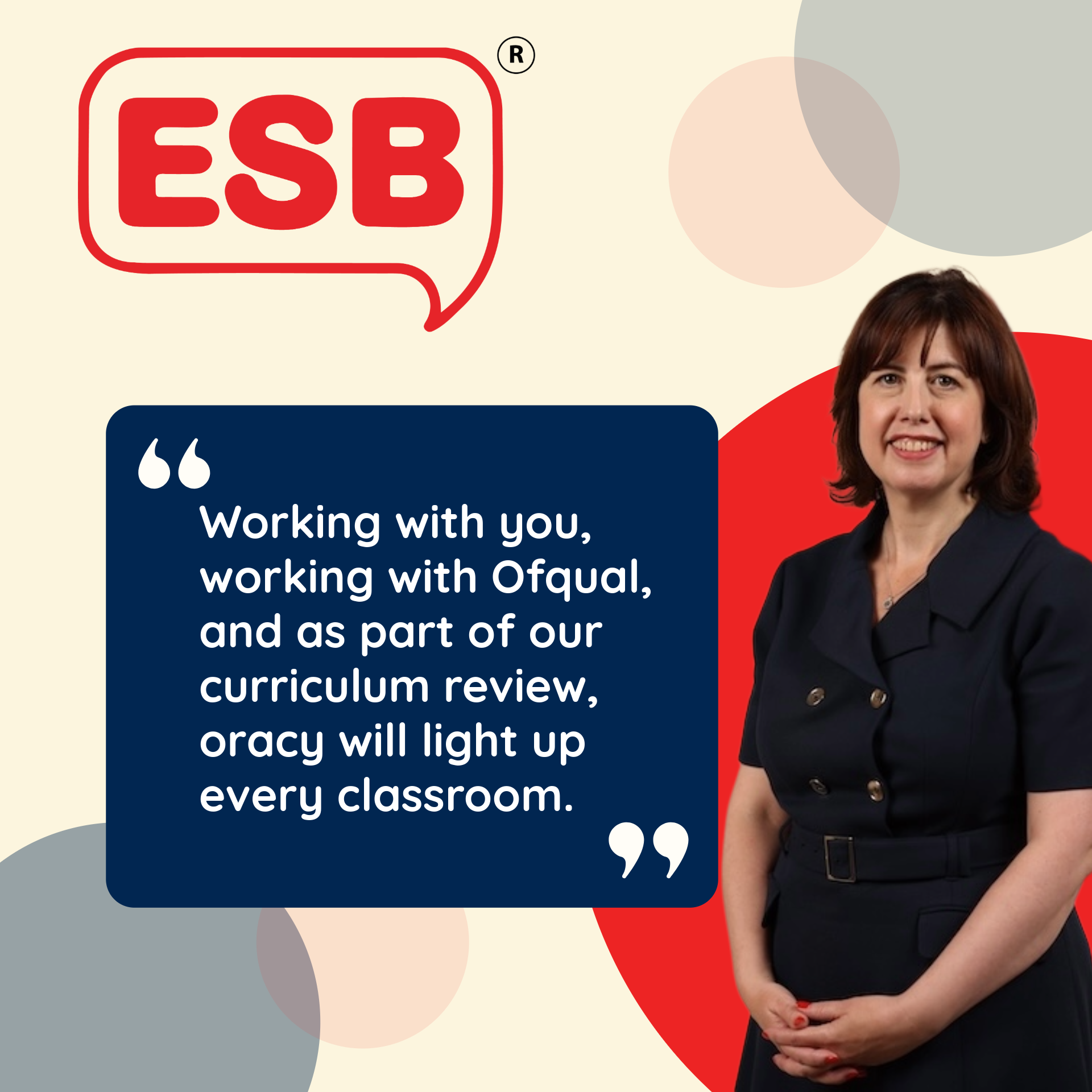
Education Secretary Lucy Powell outlines plans to strengthen oracy in the National Curriculum at the CST Conference, 15 October 2026. Image and quotation sourced from the Department for Education’s official speech.
What has the Education Secretary announced about oracy?
In her address, Lucy Powell highlighted the importance of confident communication for learners’ future opportunities, particularly as artificial intelligence continues to transform education and employment.
The Education Secretary announced that oracy would become a distinct strand within the revised English National Curriculum, with an emphasis on ensuring children from all backgrounds have opportunities to develop their speaking and listening skills.
“…with AI on the rise, we need to go harder on the skills that makes us human, like oracy.
Read Education Secretary Lucy Powell’s full speech to Confederation of School’s Conference 2026
That ability to articulate yourself confidently is central to success in work and in life, but for too long it’s been a marker of privilege.
Now it will become the right of every child – nobody left out because they can’t speak up.
That’s why we’re hardwiring oracy into the revised National Curriculum.
And I can announce today that I will give oracy equal status to reading and writing, as a new strand of the English curriculum.
Working with you, working with Ofqual, and as part of our curriculum review, oracy will light up every classroom.
Both in content and in assessment, speaking, listening and communicating will be a core part of every child’s education, from primary to GCSE and beyond.”
She also indicated that assessment would form part of this renewed focus.
For schools, this signals a potentially significant change in how oracy is positioned within the curriculum.
While the detailed requirements and assessment arrangements are still to be established, the announcement provides a clear indication of the direction of education policy in England: speaking, listening and effective communication are to receive recognition alongside reading and writing.
Why oracy assessment matters just as much as teaching it
At ESB International, we have long maintained that speaking and listening should be treated as fundamental skills, worthy of meaningful assessment and recognition.
Schools already dedicate considerable attention to developing literacy and numeracy, supported by established methods for evaluating learners’ progress and celebrating their achievements.
We believe oracy deserves similar consideration.
After all, how can schools consistently demonstrate progress in speaking and listening without opportunities to assess and recognise these skills?
Meaningful oracy assessment can help schools establish clear expectations, understand individual learners’ strengths, identify areas for development and demonstrate progression throughout their education.
It can also provide learners with something particularly valuable: formal recognition of their ability to communicate.
For many young people, having their speaking and listening skills assessed and celebrated can be an important confidence-building experience. It provides an opportunity to demonstrate skills that may not always be reflected in traditional written assessments.
Assessment need not mean additional examinations or unnecessary pressure on teachers. When thoughtfully designed, it can complement everyday classroom learning and provide meaningful evidence of achievement.
Over 70 years of championing oracy and its assessment
ESB International’s commitment to oracy predates the current national conversation by more than seven decades.
Since its establishment in 1953, the organisation has championed the importance of spoken communication, providing qualifications that give learners opportunities to develop and demonstrate their speaking and listening skills.
Its involvement extends beyond qualification delivery.
ESB International contributed evidence to the All-Party Parliamentary Group (APPG) for Oracy’s Speak for Change inquiry, advocating for oracy to receive greater recognition within education policy and for assessment pathways that recognise spoken communication. The inquiry recognised ESB International’s established qualification framework as a model for assessing learners’ oracy skills.
More recently, ESB International also welcomed the Curriculum and Assessment Review’s focus on oracy, supporting calls for greater coherence and recognition of these skills throughout education.
The latest announcement reflects many of the principles ESB International has consistently championed: that every learner deserves an opportunity to develop their voice, that communication skills are essential for education and employment, and that their achievements deserve meaningful recognition.
What are the benefits of assessing oracy in schools?
Through its longstanding work with schools and learners, ESB International has seen how structured oracy assessment can support personal development alongside academic progression.
Our assessment approach places learners at the centre of the experience, encouraging them to choose topics that reflect their interests, share ideas with others and participate in purposeful communication.
The benefits of this approach can extend well beyond an individual assessment.
Building confidence and self-expression
Preparing and delivering spoken tasks gives learners opportunities to practise expressing themselves, share their interests and develop confidence when speaking to others.
Unlock active listening and critical thinking
Oracy is not simply about delivering a presentation. Through discussion, questioning and responding to others, learners develop the ability to listen carefully, consider different perspectives and communicate thoughtfully.
Providing meaningful evidence of progression
Structured assessment gives schools an opportunity to demonstrate how learners’ speaking and listening skills develop over time, supporting their wider oracy provision.
Recognising achievement and celebrating learner voice
Receiving a qualification can provide a valuable sense of achievement, particularly for learners whose strengths may be more readily demonstrated through spoken communication than written work.
Preparing learners for education, employment and life
From classroom discussions to interviews, presentations and workplace communication, oracy develops transferable skills that learners can continue using long after leaving school.
Encouraging collaboration and teamwork
Through group discussions, shared presentations and interactive activities, learners develop the ability to work effectively with others, contribute ideas, respect different perspectives and build positive relationships.
ESB International’s collaborative research with Whitgreave Primary School, published in the Chartered College of Teaching’s Impact journal, identified measurable improvements in learners’ confidence, prosody and active listening when oracy was taught and assessed through a structured approach.
These principles underpin ESB International’s approach to assessment, which prioritises authentic communication, learner choice and supportive assessment experiences.
How can schools assess oracy within their curriculum?
As schools consider what the proposed National Curriculum changes could mean for their teaching and assessment, ESB International already provides established qualification pathways that can be adapted to different learners, settings and curricular priorities.
My Voice: Internally assessed oracy qualifications for primary schools
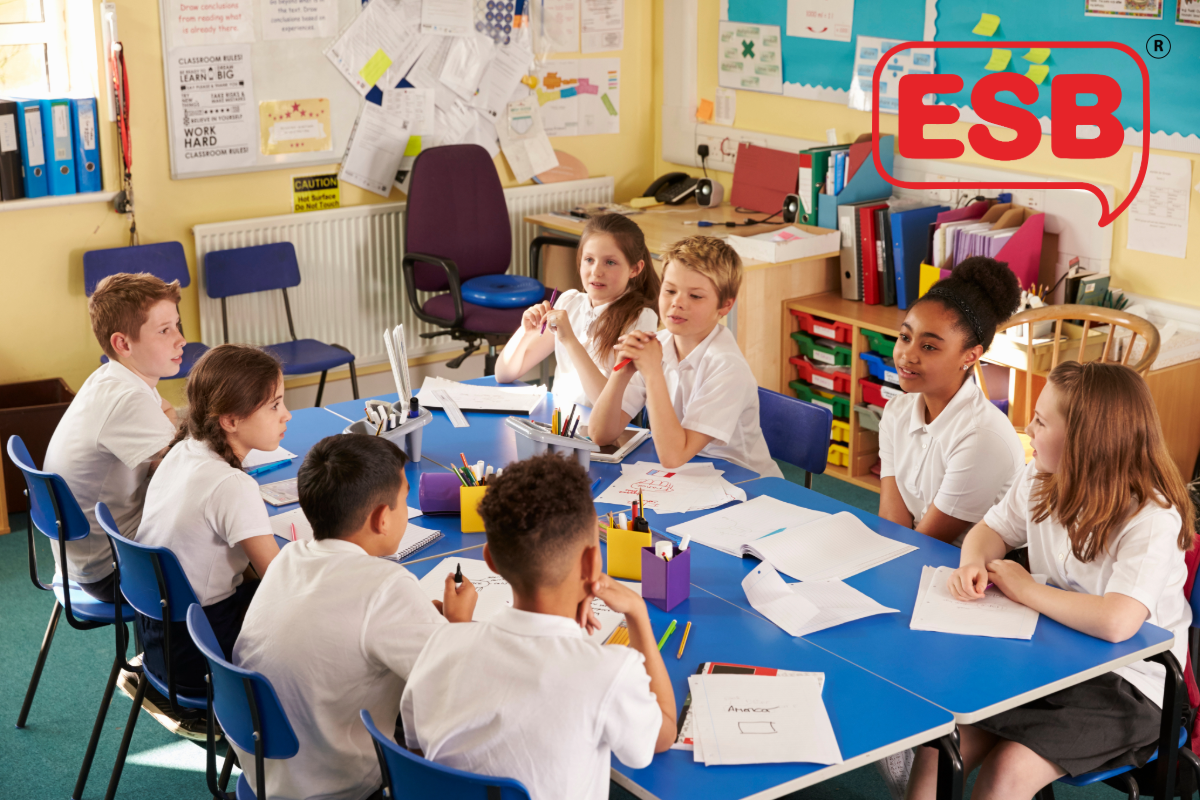
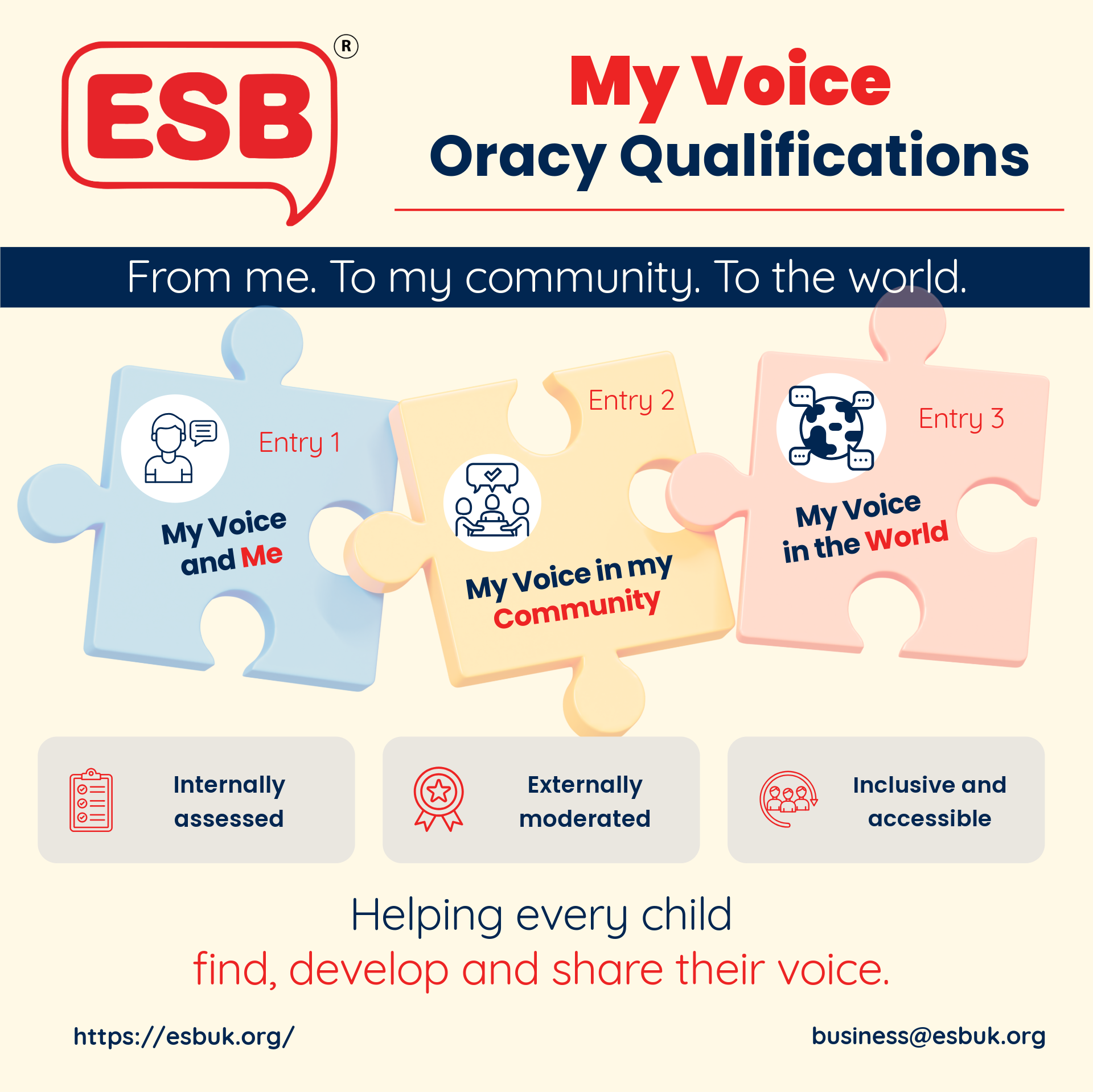
For primary schools looking to embed oracy assessment into everyday teaching, ESB International’s new My Voice qualifications offer a flexible approach to recognising speaking and listening skills throughout Key Stages 1 and 2.
The suite comprises three progressive qualifications:
- My Voice and Me (Entry 1): Developing foundational speaking, listening and storytelling skills.
- My Voice in My Community (Entry 2): Encouraging collaboration, discussion and communication connected to learners’ communities.
- My Voice in the World (Entry 3): Developing discussion, debate and critical thinking through wider global themes.
Unlike ESB International’s traditional externally assessed qualifications, My Voice assessments are conducted internally by trained school staff, with external moderation provided by ESB International.
This allows schools to collect evidence of communication skills through everyday classroom activities and recognise learners’ achievements without requiring a visiting assessor.
Externally assessed oracy qualifications: formal recognition of communication skills
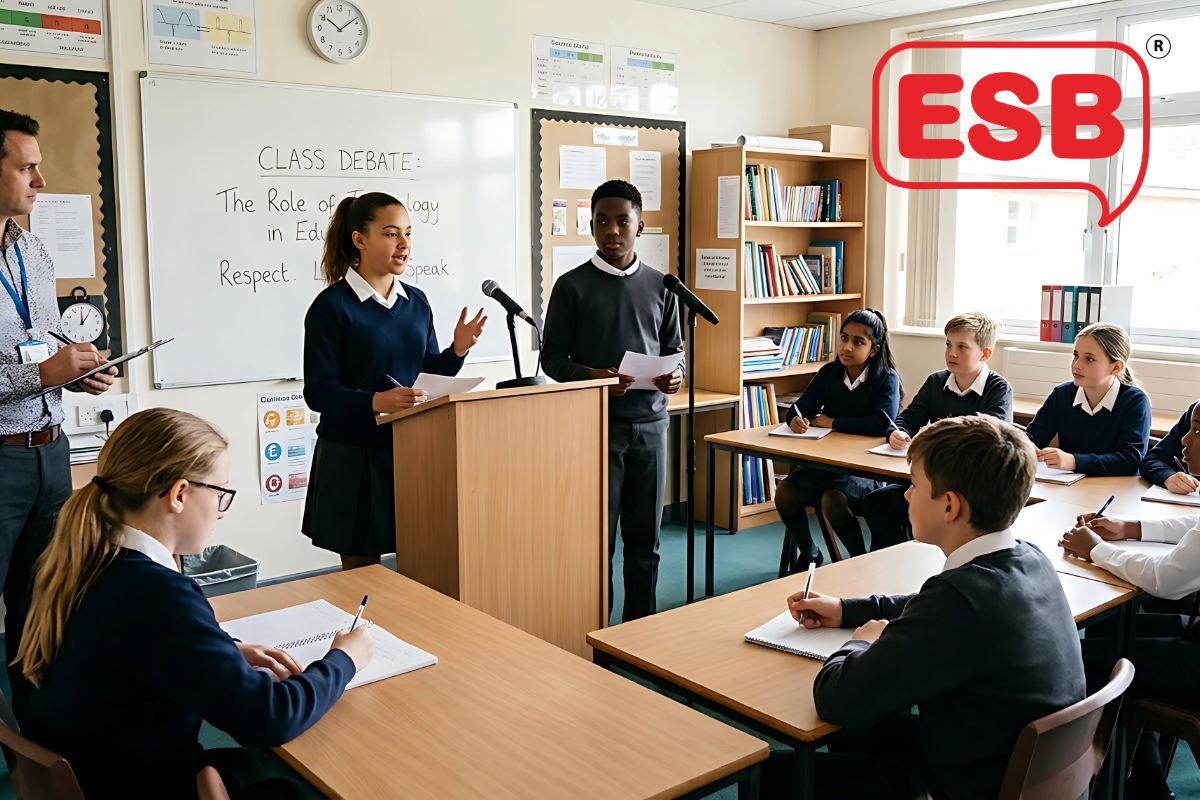
ESB International also offers an extensive range of externally assessed oracy qualifications, supporting learners from Early Years through to secondary and post-16 education.
These qualifications provide structured opportunities for learners to demonstrate their skills through presentations, reading aloud, discussion, questioning and debate.
Assessments are conducted by trained and standardised ESB International assessors, typically in supportive group settings that encourage interaction and active listening.
For schools, external assessment provides an independent measure of learners’ communication skills while reducing the assessment and marking burden on teaching staff.
ESB International’s portfolio also includes Ofqual-regulated qualifications at Level 1 and above, alongside specialist pathways for learners with English as an Additional Language (EAL) and Special Educational Needs and Disabilities (SEND).
Schools can incorporate these qualifications into existing curriculum subjects, dedicated oracy programmes, enrichment activities or targeted learner development initiatives.
Explore our unique, externally assessed oracy qualifications.
Preparing for the future of oracy in education
The proposed changes to the National Curriculum provide schools with an opportunity to consider how speaking and listening are taught, assessed and recognised across different year groups and subject areas.
Although the full details of future curriculum and assessment arrangements are yet to be confirmed, schools do not need to wait for new requirements before strengthening their approach to oracy.
Developing a structured pathway for spoken communication, identifying meaningful opportunities for assessment and recognising learners’ achievements can already form part of a school’s wider educational approach.
ESB International welcomes the renewed national focus on oracy and looks forward to continuing its work with schools, educators and the wider oracy community.
Our belief remains unchanged: if speaking and listening are fundamental to education, employment and life, they deserve to be developed, assessed and recognised alongside every other core skill.
Whether your school is beginning its oracy journey or looking to strengthen an established approach, ESB International can help you explore qualifications that complement your curriculum and recognise your learners’ communication skills.