English Speaking Board (International) Ltd. (ESB) is thrilled to announce Week 3 of its ongoing ‘Oracy for All’ campaign, a five-week initiative designed to help empower more learners with significant learning needs to achieve through inclusive and ambitious Oracy qualifications.
This week’s focus, “Oracy for Interviews and the Workplace,” shines a spotlight on the essential role of communication skills in preparing learners for workplace success, boosting their confidence, and fostering future independence.
According to the Oracy Education Commission’s recent ‘We Need to Talk’ report, spoken communication consistently tops employers’ list of desired skills, yet it remains one of the most significant gaps among school leavers and graduates.
Says ESB’s CEO, Tina Renshaw:
ESB is committed to closing the communication skills gap for all learners, especially those with significant learning needs. Through this initiative, we aim to empower students with essential Oracy skills that not only boost confidence but also foster self-esteem, self-identity, and independence – skills that are crucial for successful job interviews and workplace interactions.
Our Building Confidence in Communication qualifications are Ofqual-regulated and are specifically written for learners who don’thold a qualification at Level 1 or above. The ‘Communication for Interviews and the Workplace’ suite within this portfolio enables students to develop oracy skills essential for interview success, CV presentation, and effective communication in professional settings. By fostering discussion on workplace topics, these qualifications build and strengthen skills vital for communication and relationship-building at work.
ESB’s ‘Building Confidence in Communication’ Qualifications: Real Impact at Abbey Hill Academy and College
Over the last three years, ESB has gathered and analysed data from Abbey Hill Academy and College, a special school in Stoke on Trent. The results reveal valuable insights into how our ‘Building Confidence in Communication’ qualifications help learners achieve meaningful progress in essential communication skills, which are key for the workplace and beyond:
Communicates clearly and connects with the audience: 80% of learners made progress (1LP), and 20% made further progress (2LP).
Structures a presentation appropriately: 60% of learners showed progress (1LP), while 40% made further progress (2LP).
Presents and explains a process: 70% of learners made progress (1LP), with an additional 20% achieving further progress (2LP).
Elaborates on information: 80% of learners improved (1LP), and 20% made further progress (2LP).
Answers questions clearly and fully: 70% of learners made progress (1LP).
Asks relevant, open questions: 90% of learners made progress (1LP).
Demonstrates active listening:100% of learners showed progress (1LP).
Levels of Progress (LP) are based on teacher judgments and communicate a learner’s progression in skill and knowledge acquisition over time. For our Building Confidence in Communication qualifications, these judgments rely on the following ESB grade descriptors: Developing, Emerging, Established and Consolidated.
Crowdys Hill School Success Story
A powerful video featured in this week’s campaign shares testimonials from partner schools, including Villiers Park Educational Trust’s School – Crowdys Hill School – a special educational needs school in Swindon.
We’ve been working with the English Speaking Board for a number of years and students in our sixth form are put forward for the Entry Level 3 Award in Inspiring Confidence in Employability, we aligned our existing careers coursework to the topics of the ESB objectives and students also put together a presentation about work experience or a hobby.
The assessors are brilliant; they understand the setting completely and are really encouraging with students when they give their presentations and simulate the phone calls. They also go through student CVs and speak to each one individually about their aspirations. As well as being a valuable nationally recognised qualification, we’ve seen a noticeable increase amongst students in the confidence in public speaking but more importantly social interaction.
Ben Vickery, Careers Lead at Crowdys Hill School shares how ESB qualifications have positively impacted his learners
Make Oracy for All a reality
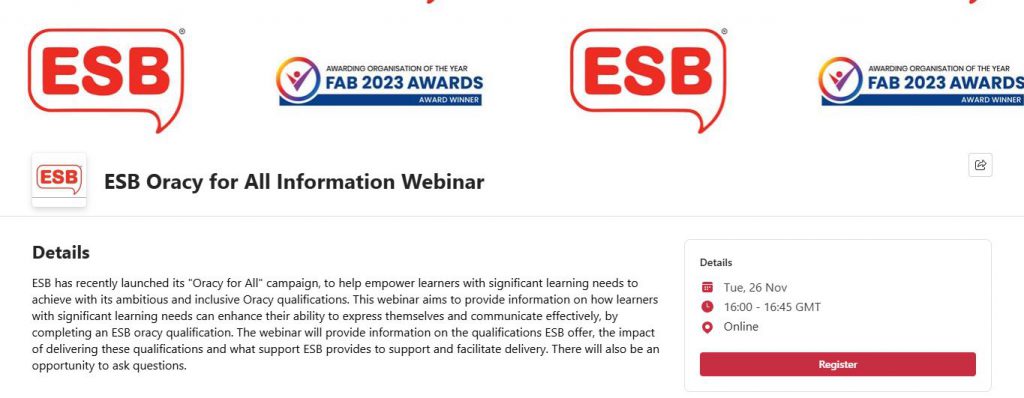
ESB’s ‘Oracy for All’ campaign underscores ESB’s mission to make life-changing communication skills accessible to every learner. To learn more about ESB’s qualifications, click here to join our webinar on Tuesday, 26th November, at 4.00 pm for an in-depth look at how these qualifications can make a real difference to the lives of individuals.
If you cannot attend the webinar, you can reach out to ESB’s Business Strategy Team at business@esbuk.org for additional resources and information. ESB is proud to be making a difference – empowering every learner to help achieve their full potential in the workplace and beyond.
In response to the Oracy Education Commission’s recent report, “We Need to Talk,” English Speaking Board (International) Ltd. (ESB) has a strong focus on the role of oracy education in enhancing employability and essential workplace skills.
The Commission’s report, titled “We Need to Talk”, underscored the critical role oracy plays in preparing young people for future challenges, particularly in the workplace.
“Spoken communication and interpersonal skills are highly valued and in demand by employers. They consistently top the list of skills demands yet they emerge as one of the biggest skills gaps in the school leaver and graduate workforce.” (pg. 34 – ‘We Need to Talk’ Oracy Education Commission’s Final Report)
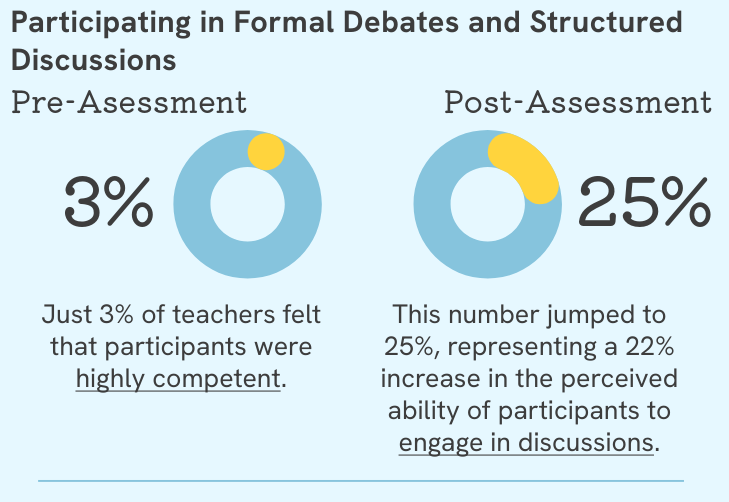
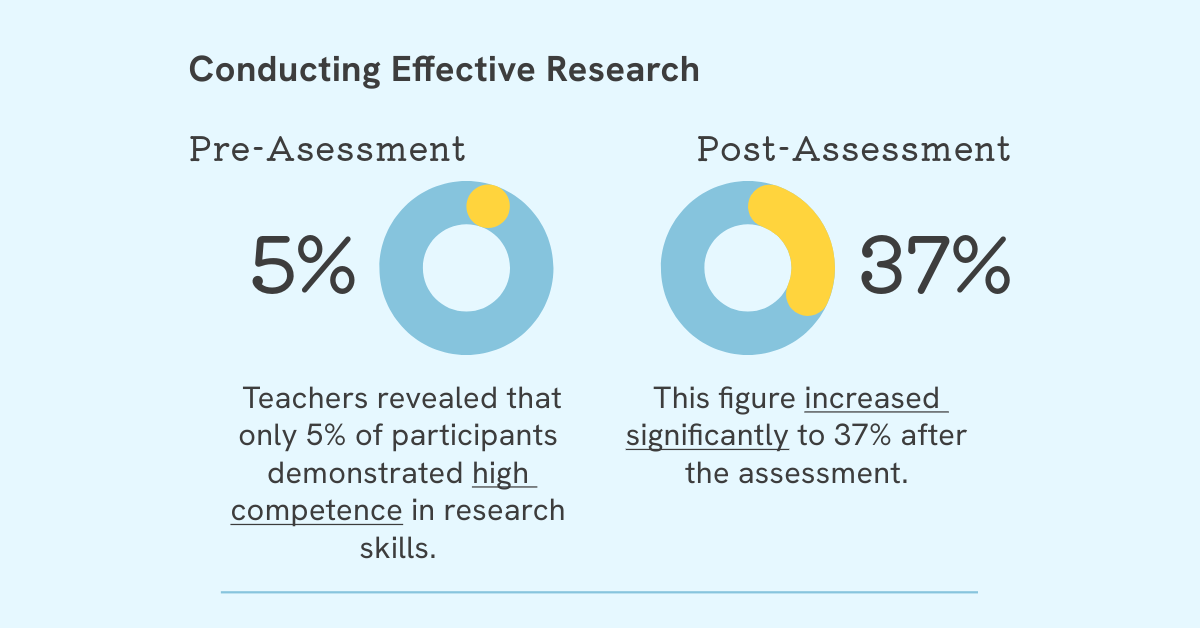
ESB’s Impact Data identifies that learners who complete its qualifications demonstrate significant improvements in their speaking and listening skills.
Teachers were asked to rate how much they believe ESB qualifications have helped develop these skills, particularly in response to challenges posed by the pandemic. On a scale of 0-10, the average rating was an impressive 8.6.
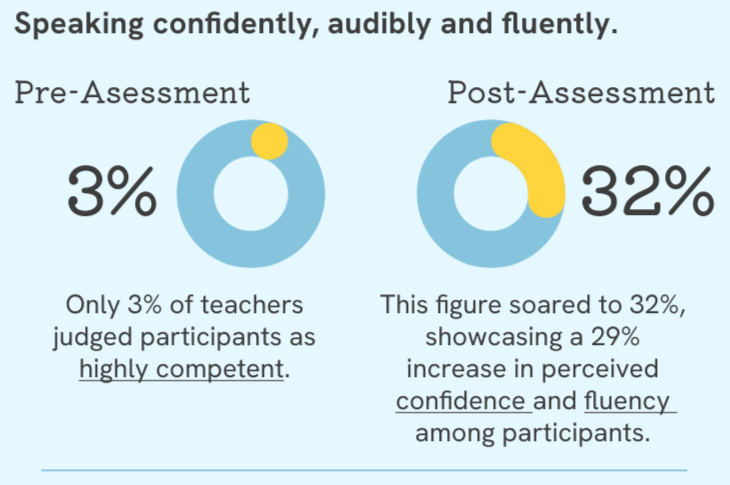
Furthermore, teachers observed a 29% increase in learners who were highly competent in “speaking confidently, audibly, and fluently” after completing their ESB qualification.
Says ESB’s Chief Executive, Tina Renshaw:
ESB’s employability-focused oracy qualifications, which are externally assessed and carried out in peer groups, play a crucial role in developing young people’s speaking and listening skills by creating real-life communication-rich situations. In particular, preparing for and experiencing an ESB qualification fosters learner agency and empowers young people to find their place in the world.
Key Features of ESB’s Oracy Employability Focused Qualifications
Practical, Real-Life Assessments ESB’s Speech for Employability qualifications are designed to immerse students in real-world scenarios, including presentations, mock interviews, formal telephone calls, pitches and listening and responding to views. These activities enhance learners’ communication skills, preparing them for job interviews and workplace challenges. Preparing for these qualifications fosters teamwork, problem-solving, leadership, group speaking and collaboration in a supportive environment.
Building Confidence The Oracy Education Commission report emphasised the importance of building young people’s confidence in speaking situations. ESB’s qualifications are designed to do exactly that, and our research from our National Impact Report 21-22 has shown that there is a significant improvement in students’ self-assurance post-assessment. Carried out in small groups, ESB assessments helped many students who initially felt anxious about speaking in front of others to emerge with newfound confidence – a key employability trait identified in the report.
Employability Focused Oracy Teacher Resources ESB offers a wide range of online teacher resources for our Oracy qualifications, which teachers can access free-of-charge, at any time.We have resources specifically designed for our employability-focused oracy qualifications.
Key Stage 2-3:ESB Level 1 Award in Speech for Employability (Grade 2) On this page, you will find qualification specifications, together with our employability-focused resources, if you scroll down on the right-hand side of the page.
Please check your downloads folder once you have clicked on the resources.
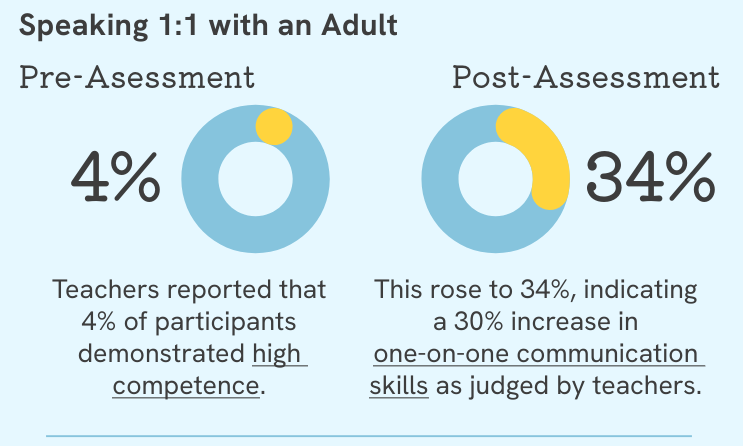
Tangible Improvements in Employability Skills ESB’s research from its National Impact Report 21-22 demonstrates the powerful impact of these employability based qualifications. Following the assessments, 34% of students were rated ‘Highly Competent’ in professional one-on-one interactions, a vital skill for job success. Additionally, over 70% of learners reported improvements in their ability to deliver talks on job-related topics, addressing the Commission’s concerns about students’ readiness for professional life
Learner-Centred Approach and Agency The Oracy Education Commission advocates for empowering students with ownership over their learning, a principle that is at the heart of ESB’s assessments. By allowing learners to choose their presentation topics and engage in discussions about jobs, careers, successful business leaders that interest and influence them, ESB assessments nurture learner agency. This approach not only motivates students but ensures the learning experience is relevant to their future aspirations, aligning with the report’s call for integrating oracy meaningfully across the curriculum.
Data from ESB’s National Impact Report
Teacher and Learner Testimonials
Teachers have praised the impact of ESB’s assessments on their students. One teacher commented:
Students who are usually quiet or reluctant to speak gained so much confidence. They all expressed confidence in completing interviews or professional conversations in the future.
Learners have echoed this sentiment, with one stating, “The best part was the interviews as it gives me a view of what we would have to do in the real world.
Find out more
In light of the Oracy Education Commission’s findings, ESB is committed to expanding opportunities for young people to develop essential oracy, employability and lifelong skills.
Adds Tina, “By embedding real-world scenarios into its qualifications, ESB not only equips students with the oracy skills needed for the workplace but also instils the confidence and agency required to thrive in their future jobs and careers.”
You can read more about the impact of ESB’s external, employability-focused oracy assessments on Key Stage 3 learners in the following article published by ESB in the Chartered College of Teaching’s peer-reviewed journal by clicking here. Additionally, you can read ESB’s National Impact Report here.
Following our endorsement of the Oracy Education Commission’s Final Report, “We need to talk”, English Speaking Board (International) Ltd. (ESB) is pleased to share further details about our initiatives and how we plan to support the aims of the national oracy entitlement.
“We support:
the greater emphasis placed on the importance of spoken language;
the vital need to prepare our young people for their futures in employment, training and education and the role of Oracy in that;
the recognition that valuing voices and listening to children and young people is central to the nurturing role that teachers and learning plays in children’s and young people’s lives
and that Oracy education needs to be inclusive, accessible to all and for all and it also needs to be reflective of the lived experiences of our communities and of authentic voices.”
3.5.1 Inclusion
For over 70 years, ESB has advocated for the importance of oracy in education, aligning with the report’s emphasis on establishing oracy as a fundamental skill alongside reading, writing, and arithmetic. `
The organisation believes that every child and young person deserves the chance to develop their communication skills, which are so crucial for success both inside and outside the classroom. By offering inclusive, learner-centred qualifications that focus on speaking and listening skills, ESB ensures that oracy is accessible to all learners, regardless of their background or ability.
3.5.4 What needs to change: Recognise and value different forms of communication
Recognising and valuing different forms of communication is fundamental to ESB’s approach. ESB’s ambitious oracy qualifications follow universal design principles, ensuring that all learners can access assessments through reasonable adjustments. The report emphasises the need to support diverse communication styles, particularly for students with Speech, Language, and Communication Needs (SLCN), which aligns with ESB’s commitment to inclusivity.
Additionally, ESB is proud that its oracy qualification portfolio includes specialist qualifications specifically designed for learners with significant learning needs who do not have a qualification at Level 1 or above. These qualifications help overcome barriers to learning and boost self-esteem, reflecting the report’s findings on the importance of equitable access to education.
Adds Tina, “We believe that assessment should be a fair test of learners’ skills and knowledge. For some learners the usual format of our assessment may not be suitable or accessible, and we recognise that to enable access to our qualifications, additional learning needs are seen in the context of each learner and how they can best achieve.”
One of ESB’s Ambassadors, Hrishi Venkatesh, shared his journey with Aspergers and how ESB assessments helped him become a confident communicator, which he discusses in this video:
As ESB moves forward, it is looking to make its qualifications even more inclusive by reviewing the language used in its assessment criteria and descriptors to make sure learners who are neurodiverse are not disadvantaged.
3.3 The opportunities of oracy education beyond the classroom
3.3.1 Employability and skills
‘Workplace experiences, including opportunities for students to practise interview skills and engage in authentic workplace communication, can play a key role in helping young people develop their speaking skills. These experiences also help students to feel more confident about entering the world of work’. (Pg. 34)
‘Lack of confidence in speaking skills has a real impact on young people’s career prospects. By Year 11 just 59% feel confident talking about their skills in an interview. Only 60% are aware how a speaker might exert influence through the way they speak.’ The Careers And Enterprise Company, Evidence To The Commission (pg. 34).
ESB assessments simulate real-world speaking and listening scenarios where every learner’s voice is valued, building confidence and agency. Set in small groups, they foster teamwork, problem-solving, leadership, and collaboration, preparing learners for real-world challenges in a supportive environment.
Impact of ESBEmployability Focused Assessments
Each year, ESB works with over 200 schools in the UK and internationally, assessing more than 12,000 learners. ESB’s impact is evident in the results of its 2021-2022 National Impact Report, which revealed impressive progress in learners’ communication skills.
Progress made by learners shows that the completion of ESB oracy qualifications has given learners skills and knowledge which are vital to their character and employability, the three pillars of work-readiness as described by The Confederation of British Industry (CBI).
3.3.2 Wellbeing and belonging
‘Intentionally valuing students’ voices and nurturing a culture of agency, attentiveness and collaboration supports children to flourish creatively, civically and in their social and emotional well-being and belonging. This improves their educational experience and their chances of thriving as friends, citizens and workers when they leave school. ‘(p.37)
ESB’s assessment methodology provides a real opportunity for learners to exert individual agency. ESB found through its research into impact (ESB’s National Impact Report 21-22) that learners developed their intra and interpersonal agency through the process of preparing for ESB qualifications. Particularly, learners value the opportunity to make their own choices about what they want to talk about.
The impact that ESB has had as an enrichment on our sixth form has been vast. ESB allows students to bring their personal experiences and community connections into the classroom, fostering meaningful discussions beyond the standard curriculum. It allows us to speak to the communities that learners live in – enabling them to talk about the things that are important to them and not just things that they’re going to be examined in at the end of the year.
Raj Khera, Teacher at ESB Centre, Holly Lodge School
Adds Tina: Through our ambitious and inclusive oracy assessments, we give learners communication-rich opportunities and a platform on which their voice and their passions are not only heard, but valued, delivering confidence and agency and a sense of self.“
Future ESB Initiatives
Enhancing the role of spoken language in the curriculum
While the National Curriculum does address spoken language, its role has been ‘downgraded’ in favour of a greater focus on ‘Reading’ and ‘Writing.’ The curriculum’s approach to spoken language heavily emphasises traditional models, such as presentational talk, poetry recitation, and ‘standard English’. Moreover, its strong focus on ‘standard English’ risks devaluing other ‘non-standard’ dialects of English.
Standard English has long been a feature of ESB qualifications, so as to reflect the national curriculum. ESB is shifting away from using this terminology to ensure that its qualifications reward authentic, realistic communication. It aims to offer qualifications that allow learners to use different repertoires of English, selecting the right register and tone for each task and context.
New Patron Appointments
ESB is thrilled to announce that author Meena Kumari Wood has become a Patron of the organisation. A passionate advocate for educational success, Meena brings a wealth of experience as a consultant, trainer, and former HMI (Ofsted). Her book, “Secondary Curriculum Transformed: Enabling All to Achieve,” underscores ESB’s impactful work.
Meena states, “It is clear that disadvantaged children are the ones most in need of public speaking skills, especially those from homes, where there is not much talk. As we have seen in a world where entrepreneurial skills and communication skills are paramount, all our students must have the confidence and the ability to articulate their opinions; these are attributes that last a lifetime.”
Connecting this thought to what ESB offers, she adds: “The ‘Connect, Inform, Perform and Employability’ Pathways in ESB assessments contain specific oracy skills for each context. ‘Connect’ allows students to develop their literacy and analytical skills, through a biographical talk, a chosen poem or drama piece and includes being able to respond to audience questions. ‘Inform’ can be focused on a KS3 topic in any subject. Students may give a personal interest talk, review a news piece and give a persuasive speech, within a political, economic, environmental or social context. ‘Perform’ allows students to unlock their creativity through the performance of a self-composition or performance of an established work. ‘Employability’ supports those who wish to deepen their understanding of a career and to prepare for the job market”.
ESB also has a second set of pathways tailored specifically for KS4 learners.
Additionally, ESB has appointed Disability Rights Champion Dr Kush Kanodia as a Patron of ESB. Dr Kanodia was drawn to ESB after hearing of its Outreach Campaign, which financially supports organisations and groups, whose learners face disadvantage due to socio economic, migrant or asylum seeker status, or special educational needs and disabilities.
Tina adds, “We look forward to Meena Kumari Wood and Dr Kanodia getting involved in ESB’s mission to remove barriers for learners. I am in no doubt of the positive impact that they will bring to our work.”
Oracy for All Campaign Launch
ESB is launching its Oracy for All campaign in the next few weeks, which aims to reach more learners with significant learning needs, encouraging them to take our qualifications to help equip them with the confidence, communication, independence, work, and life skills to help them succeed. This campaign aligns with ESB’s commitment to fostering inclusivity, ensuring that every learner, regardless of their challenges, has access to high-quality oracy education that empowers them to achieve their full potential.
Find out more
ESB is proud to support the Oracy Education Commission’s vision and continue to work towards a future where every learner has access to high-quality oracy education that meets their individual needs and supports their development as confident communicators.
English Speaking Board (International) Ltd. (ESB) welcomes the publication of the Oracy Education Commission’s Final Report, “We Need to Talk”, which emphasises the urgent need for a national commitment to prioritising oracy in schools across England.
“Now more than ever, we need our young people to be equipped to ask questions, to articulate ideas, to formulate powerful arguments, to deepen their sense of identity and belonging, to listen actively and critically, and to be well-steeped in a fundamental principle of a liberal democracy—that is, being able to disagree agreeably. That’s where investing in our young people, equipping them with the knowledge, skills, attributes, values and self-assurance, will help them to thrive in an uncertain future.” (pg. 4)
The report highlights the crucial role that speaking and listening skills play in empowering students to succeed academically and socially in an ever-changing world. It calls for embedding oracy throughout a child’s educational journey, ensuring that all learners, regardless of background or ability, have the opportunity to thrive in both academic pursuits and civic engagement.
With over 70 years of expertise in delivering learner-centred and inclusive oracy qualifications, ESB fully supports the vision outlined in “We Need to Talk” for establishing a national oracy entitlement.
Says ESB’s Chief Executive, Tina Renshaw:
It has been a consistent aim since ESB’s inception over 70 years ago to unlock the potential of children and young people by focusing on their speaking and listening skills or Oracy. In fact our purpose is that we want all learners to possess the oracy and English language skills they need to achieve their aspirations – we stretch the most able, support the least confident and realise the potential of all by closing the disadvantage gap. We have provided opportunities for thousands of children and young people to develop their Oracy, their sense of self and their voices.
“We support:
the greater emphasis placed on the importance of spoken language;
the vital need to prepare our young people for their futures in employment, training and education and the role of Oracy in that;
the recognition that valuing voices and listening to children and young people is central to the nurturing role that teachers and learning play in children’s and young people’s lives
‘that Oracy education needs to be inclusive, accessible to all and for all and it also needs to be reflective of the lived experiences of our communities and of authentic voices.”
ESB will be digesting the report over the coming days and leading further conversations about how we can support the aims of a national Oracy entitlement and what role ESB can play to support schools, colleges and specialist providers of education to achieve this.
If you’d like to read a more detailed response from today’s national launch please click here.