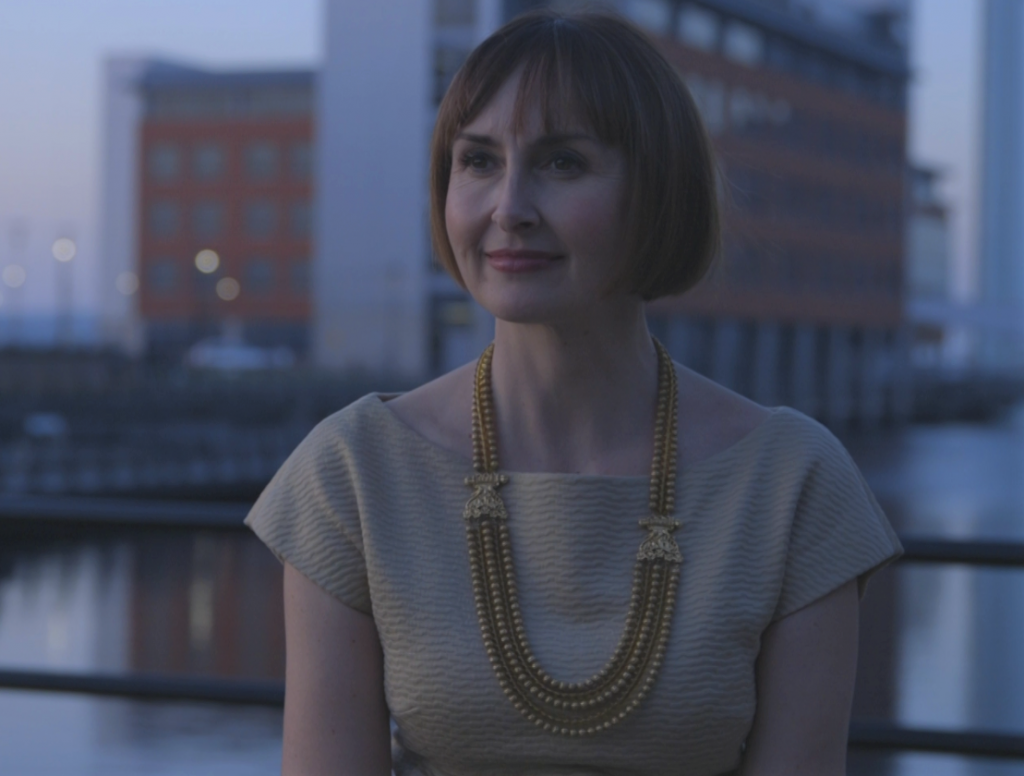
Author: Liam Morton

  • Welcome back to all of our UK based centres – Academic Year 2021-22

    Thank you so much to all our centres that booked assessments with us last year. We all worked hard so that your learners could achieve, in spite of the continuing challenges. I want to thank the head office team, our assessors and markers for their part in making that happen for you and your learners.

    As we are starting the new academic year, I wanted to update you on our position for face to face assessing for all our Skills for Life and Speech qualifications occurring in the UK. It is our intention that for the academic year 21-22,face to face assessing will return for all these speaking and listening assessments. However, should public health guidance change, or a local situation emerge ESB will be able to consider using adapted assessments again (remote assessing) as Ofqual has allowed us to adapt in this way, if necessary.

    We will be releasing an ESB News later in the term so we can share all the activity that is happening in the ESB English language and Oracy world.

    I earnestly hope that this year is a year full of potential and positivity for you at your centre.

    Best wishes,

    Tina Renshaw, CEO

  • In Memory of ESB Ambassador, Patsy Musto

    https://www.theguardian.com/travel/2021/nov/05/patsy-musto-obituary

    It was with great sadness that ESB recently learnt of the passing of ESB ambassador Patsy Musto.

    Here, her great friend and colleague Shelagh Snell, remembers her.

    Patsy Musto  1946 – 2021

    ESB has always had its fair share of ‘strong characters’ and all who knew Patsy Musto would agree that she was one of them.

    Patsy and I first met at a conference in Exeter when we were both newcomers to ESB way back in the 1980s. We both ‘rose through the ranks’, as it were, to become assessors and then colleagues on what was then called ‘The Committee of Management’. Patsy served several years as a formidable Honorary Secretary and her contribution to ESB in this role was immense.

    She gave up most of her work with the organisation when she took over ‘French Encounters’, a highly successful business, originally started by her mother, offering residential courses in experiencing something of the ‘French Way of Life’, to school children. This meant that she lived in Normandy, where the business was based, for many months of the year (a wonderful bonus for her many friends who were always warmly welcomed and generously entertained in her lovely house overlooking the Seine at Villequier).

    Patsy was always a loyal and staunch member of ESB and the last time I saw her in May, when she came for lunch with friends, she expressed her delight on reading the recent up-beat newsletter.

    She will be remembered with enormous affection as an elegant and highly intelligent colleague and friend-confident and sometimes perhaps overly outspoken (although I know that this often masked inner self-doubt and vulnerability). She will be greatly missed.

    ESB Logo

    James Patrick also remembers Patsy’s tremendous contribution to ESB.

    He says:

    Patsy was a staunch, loyal member of the ESB family for many years and her work for the Board was invaluable at times when our future often looked a little doubtful.

    She will be missed by all who knew her for her brisk and decisive style, which was much appreciated. So sorry she leaves a hole in ESB.

    James Patrick

  • ESB Backs Campaign to improve Children’s Communication following Covid

    Up to 1.5 million children face being left behind in their speaking and understanding due to disruption caused by Covid, research suggests.

    Supported by ESB, Speaking Up for the Covid Generation (ican.org.uk) is produced by I CAN, a charity which aims to help children communicate.

    ESB is part of their Communication Consortium on the research, joining other groups including Afasic, Autism Early Support, Better Communication, Commtap, NAPLIC, Speech Bubbles and Talking Mats and Voice 21.

    In a BBC report last week highlighting I CAN’s research, it said that a majority of teachers are worried that children who are behind will not be able to catch up and that more help is needed for pupils starting secondary school.

    For its report, I CAN asked primary and secondary school teachers across England, Scotland, and Wales about the impact Covid 19 had had on their pupils. It found slightly over two-thirds (67%) of primary school teachers believe the children they teach are behind with their speaking and/or understanding. Almost two-thirds (60%) of secondary school teachers, who have pupils who are behind, were worried that these pupils would not be able to catch up.

    ESB’s Chief Executive, Tina Renshaw, says: “We fully support the findings from I CAN and believe more has to be done for children who have had their communication skills impacted by Covid. We feel it’s important to be part of this consortium. It also links into the work of the recent APPG on Oracy in which we play a significant role.

    “Here at ESB, inspiring high-quality communication in people of all ages is something we continue to recognise. We believe good communication skills lie at the heart of social mobility and we’re here to support our learners to develop them through our assessments. Oracy provides a gateway, not only to improved reading and writing, but also to learning across the whole curriculum.

    “As the report highlights, speaking and understanding language is a crucial skill which, in fact, underpins all learning. Our speech assessments give learners equal opportunities to develop these essential life skills, impacting them well beyond the classroom.”

    The research suggests the two biggest reasons why children are struggling with speaking are not being able to talk face-to-face with their friends (70%), and the overuse of tablets/phones and computers (69%).

    Jane Harris, I CAN Chief Executive says: “For 1.5 million children to be struggling to be able to speak and to understand what is being said to them should be a wake-up call to government and the education sector. Our survey shows that teachers in the classroom are not able to support the children who need their help because the support the government is offering is only for four and five-year-olds.”

    There is no central initiative targeting older children in either primary or secondary education. Government spending plans include:

    • in England, £18m for early years
    • in Scotland, summer activities with a focus on wellbeing
    • in Wales, the recruitment of 1,800 extra school staff

    A Department for Education official said: “Our national curriculum for English reflects the importance of spoken language in pupils’ development and we are investing in targeted support for those from disadvantaged backgrounds who may be at risk of falling further behind.”

    The report emphasises the need for further support due to the negative impact Covid has had and highlights the correlation between an individual’s social interaction and the development of their key communication skills, stating that children in deprived areas are particularly at risk. ESB provides a range of qualifications for individuals with special educational needs and disabilities which help remove barriers to learning by enabling access to a wide range of curricula, building relationships and a sense of belonging, developing self-esteem and a positive self-identity. If you would like to find out more about these types of qualifications, please click here.

    Says Tina, “We are passionate to close the disadvantage gap. ESB is already supporting disadvantaged learners to acquire key oracy skills through its 70/70 Campaign. Launched to mark ESB’s achievements over the past 70 years, our exciting initiative aims to find and financially support by 2023, 70 organisations where their young people or community members face disadvantage due to socio-economic factors, disability or migration status and would be supported in their aspirations if they could achieve an ESB qualification.

    “The 70/70 Campaign is part of our purpose to stretch the most able and support the least confident and to realise the potential of all by closing the disadvantage gap. This campaign is not the first time that we have provided financial support to grant learners access to our qualifications. The 70/70 Campaign, however, provides an expansion on the support we already offer and aims to give confidence to learners providing them with a clear advantage as they progress through secondary schools, FE colleges, and employment.”

    Tina concludes, “We strongly endorse I CAN’s findings that speaking and understanding language should be a core goal for Government in deciding the next steps in the education recovery plan. ESB’s aim is to support all learners to possess the communication skills needed in order to achieve their aspirations.

    “Covid has created more need for support for children now more than ever. At ESB, we believe oracy to be at the heart of the learning experience. Our Speech assessments help learners to develop key oracy skills and are a clear path for oracy success. They build confidence in learners, something which is key to unlocking learners’ potential and raising achievement, developing their audibility of voice, choice of vocabulary and use of pace to communicate a message or information effectively. “

    If you are interested in finding out more about our 70/70 Campaign and whether your centre is eligible for funding, please email business@esbuk.org. ESB can’t wait to hear from you!

    I CAN’s Recommendations
    1. English Government must enhance the Education Recovery plan so that there is support for all children who struggle with their speaking and understanding.
    2. Governments need to make sure that speaking and understanding language is more core to our education system for years to come.
    3. To ensure that every teacher has training to understand the importance of spoken language, how to support its development and identify those at risk.
    4. Enable teaching staff to access training on how to develop children’s speaking and understanding skills.

    Please click here to read the full report.

  • ESB’S SUCCESS STORY IN STOKE-ON-TRENT CONTINUES TO GROW

    Back in 2014, ESB joined forces with Stoke-on-Trent’s Education Authority to help provide extra oracy education to school children in the city.

    Following a successful pilot scheme, Stoke-on-Trent City Council provided match funding for the teaching of English Speaking Board (ESB) qualifications in its schools.

    The initiative culminated in numerous schools in the city reaping the benefits of ESB assessments for their pupils, with more than 4,000 Stoke learners assessed in the last three years alone.

    ESB’s commitment to improving oracy in Stoke remains strong. Its involvement supports learners to enhance their current skill set, giving them a clear advantage as they progress into secondary schools, FE colleges, and employment.

    Now, ESB is supporting some of these schools with its innovative 70/70 campaign launched to mark ESB’s achievements over the past 70 years. Our 70/70 Campaign aims to find and financially support by 2023, 70 organisations where their young people or community members face disadvantage due to socio economic factors, disability or migration status and would be supported in their aspirations if they could achieve an ESB qualification.

    This is not the first time that ESB has provided financial support to grant learners access to its qualifications. The Christabel Burniston Fund has supported more than 40 centres over the last three academic years and the 70/70 Campaign is an expansion on the support we already offer.

    At the 2017 ESB Stoke Schools’ Conference, the LEA’s Interim Assistant Director of Learning and Services at the time, Rob Johnstone, said: “It has been a delight to see first-hand the fruition of our partnership with ESB, and I firmly believe that it has accelerated the progress of our pupils, preparing them for further education and the world of work which lies ahead.”

    Of course, the best advertisement for ESB comes from the schools themselves! Please read what Stoke schools have to say about their ESB experience:

    “ESB gives us a qualification to work towards to really focus on the speaking skills that would doubtless be ushed to the side otherwise. It gives students a platform for airing their views.” Thistley Hough Principal, Jayne Schofield.

    “We are extremely happy that our students experience this – and we believe that the benefits are ones that will continue to serve them well throughout their time in the 6th form, at university and into their careers.” Tricia Rhodes Head of Sixth Form – St Margaret Ward Catholic Academy, Stoke

    “The Christabel Burniston Fund has been instrumental in opening up a whole world of opportunities for young speakers at Plymouth Grove Primary School. The funding has enabled our children to realise that their voices are important, valuable instruments and essentially the key to their future in our increasingly noisy world. Oracy is now at the forefront of everything we do at Plymouth Grove and ESB has enabled the children to present, read aloud and listen with passion and spirit. All children have been immersed in spoken language and our dialogic classrooms have been enriched and supported by Christabel’s legacy.” Sarah Thompson, Oracy Lead at Plymouth Grove Primary School

    “We have found completing the ESB award to be an extremely worthwhile experience for our students.  We introduced it as a compulsory part of our Year 12 curriculum in response to our students’ lack of confidence when presenting and the difficulty many of them faced when having to speak publicly and in interviews and we felt that they were at a disadvantage to many from other areas/independent schools.
    “In this respect ESB has been a resounding success.  Most of our students express reluctance when it is first introduced to them but the feedback upon completion is overwhelmingly positive. Many of them have stated that it has enabled them to approach interviews and even speaking at events in front of large crowds with confidence – the transformation in some has been spectacular!”

    Jonathan Burgess from Stoke Minster CofE Primary School sums up what he believes are the benefits to his Year 5 learners, in this video.

    Tina Renshaw, ESB’s Chief Executive explains: “We are delighted to continue our longstanding working partnership with Stoke-on-Trent schools. The initiative has led to improved oracy skills for Stoke learners in the state sector. Inspiring high-quality communication in people of all ages is something we continue to recognise. We believe good communication skills lie at the heart of social mobility and is an essential part of closing the disadvantage gap.”

    ESB would like to help many more learners through its 70/70 Campaign.

    Tina continues, “Under the umbrella of our 70/70 campaign, we hope to support hundreds of young people from the third sector to gain speaking and listening qualifications that may not have been previously possible.”

    If you would like to hear more about how your school or organisation could benefit, please email business@esbuk.org.