English Speaking Board (International) Ltd

Author: Liam Morton

  • English Speaking Board (International) supports the Oracy All-Party Parliamentary Final Report

    Emma Hardy MP, Chair of the Oracy All-Party Parliamentary Group

    English Speaking Board’s assessment methodology has been endorsed as a valuable part of teaching Oracy to learners in the Final Report published by the Oracy All-Party Parliamentary Group Inquiry ‘Speak for Change’.

    Whilst the inquiry heard a spectrum of views as to whether oracy should be formally assessed, there was general agreement that the absence of currency and accountability undermined oracy’s status and value.

    As a proud contributor to the inquiry, ESB fully supports the report’s recommendations to raise the status and priority of oracy in education by calling for a shift in values, policy and practice.

    ESB’s Chief Executive, Tina Renshaw

    Tina Renshaw, ESB’s Chief Executive, says: “I am delighted that these recommendations pave the way forward to improve oracy education in schools. We have been successfully offering oracy assessments to learners for many years and know its value as a valid pathway to promote oracy in schools.

    “We take a learner-focused approach to assessment, recognising and encouraging the potential of all. We do not only assess what the young person knows or says, but what they have become. Clarity of communication and an ability to express thoughts simply, sincerely and persuasively, are qualities needed by everyone in this specialised, competitive world. Along with other examples of established practice, the report recognises that ESB’s assessment frameworks can act as a scaffolding tool for embedding Oracy into a school curriculum.

    “The report also highlights the positive impact that oracy education has on progression. Preparing today’s learner for tomorrow’s world is something ESB is passionate about. Our assessment process provides feedback for every learners to allow them to build on their skills and for the schools to receive validation and feedback on their teaching and learning.”

    With the pandemic having had a devastating impact on oracy, particularly on the spoken language development of disadvantaged learners, the report acknowledges how a greater focus on oral language improves outcomes for the most disadvantaged students and uses an example from an ESB learner to illustrate the point:

    As someone from one of the most marginalised groups in the country I believe that it is even more important that the children and young people from marginalised groups have a voice, and one that is going to allow them to have a place in the world. One that is going to allow them to create better opportunities for themselves in education and in the world of work and self-employment. Good oracy empowers children, young people and their teachers to communicate more effectively. The benefits of this are tremendous.”
    Young person from Reclaim, English Speaking Board, evidence to the Inquiry, pg. 31

    Says Tina:

    Here at ESB, we are steadfast in our determination to support as many disadvantaged groups as possible from the charity and community sectors, as well as educational centres and we are passionate to help close the disadvantage gap, as demonstrated by the launch of our new 70/70 Campaign.

    ESB is coming up to its 70th anniversary in 2023, and to honour this milestone, we are aiming to find and financially support 70 new centres where their learners, children, young people or community members face disadvantage and would be supported in their aspirations if they could achieve an ESB qualification.

    The 70/70 Campaign is part of our purpose to stretch the most able and support the least confident and to realise the potential of all by closing the disadvantage gap.


    Please click here to read about this exciting initiative in more detail.

    The report also emphasises strong support for increased focus on oracy and demonstrates how it can improve access to and subsequent inclusion in education for children with speech, language and communication needs (SLCN) and with special educational needs and disabilities (SEND), again hearing from an ESB learner:

    “Oracy skills, developed from an early age, can help bridge the social mobility gap for people like me, with disabilities such as Autism.”
    Young person, English Speaking Board, evidence to the Inquiry, pg.30

    ESB’s suite of speech qualifications for learners with special educational needs and disabilities help remove barriers to learning by enabling access to a wide range of curricula, building relationships and a sense of belonging, and developing self-esteem and a positive self-identity.

    Echoing the view of others that there is lack of specificity and ambition for oracy in the National Curriculum, Tina is quoted in the report:

    “There is not enough differentiation in the current National Curriculum for English in terms of spoken language to facilitate the delivery of high-quality oracy education, and the guidance given is insufficient for such a crucial skill set. The requirements focus largely on formal speaking and listening (presentations, speeches, debate, performance) and do not make enough reference to the broader range of talk possibilities.”
    Tina Renshaw, English Speaking Board, evidence to the Inquiry, pg. 36

    The report calls attention to the debate about whether Ofqual should reinstate an improved form of English Language GCSE spoken language assessments as a contributory element of the GCSE grading.

    “This is something we would wholeheartedly support as teachers have asked for it and we know that there are forms of valid assessment that could be reintroduced”, says Tina. “We feel we could contribute to the success of this reintroduction as ESB assessments are a clear path for oracy success with each level building on learners’ development from the previous level, providing a perfect journey to progress to GCSE level”.

    It’s great to see that our views presented two years ago were echoed and amplified by the many voices raised as part of the APPG on Oracy. Please read ESB’s written submission below.


    APPG’s Recommendations
     
    The report advocates a shift in educational culture and values, policy and practice to:

    1. Raise the status and priority of oracy in education.

    2. Agree shared expectations for oracy and increase understanding of how these can be achieved.

    3. Equip and empower teachers and schools to provide sustained, and comprehensive high-quality oracy education.

    Please click here to read the full report.

    If you missed the report launch, you can watch the event here: https://www.youtube.com/watch?v=2hTuYBQT5MQ.

  • ESB launches its 70/70 Campaign!

    English Speaking Board (International) is celebrating its 70th Anniversary in 2023!

    To honour this special milestone, we are launching a significant outreach campaign that will make access to our suite of speech and language qualifications more available to groups and organisations which are seeking to close the disadvantage gap. We hope to support organisations where their learners face disadvantage due to socio economic factors, disability or migration status. We will support them financially to access our assessments, support and training.

    Since 1953, English Speaking Board (International) Ltd. has been an innovator in the field of oracy. Its founder, Christabel Burniston MBE, was a true pioneer in oral communication, championing the importance of spoken English as a vital life skill and believing that true development of personality and security in social relationships could only grow through the confidence of speaking and listening.

    To mirror Christabel’s innovation and mark ESB’s achievements over the past 70 years, we are aiming to find and financially support by 2023, 70 centres where their learners, children, young people or community members face disadvantage and would be supported in their aspirations if they could achieve an ESB qualification.

    The 70/70 Campaign is part of our purpose to stretch the most able and support the least confident and to realise the potential of all by closing the disadvantage gap. Our search for 70 centres, which share our belief that communication lies at the heart of social mobility, will be inclusive and spread across both the education and third sectors. This initiative will allow centres to provide their learners with speaking and listening qualifications when this may not have been previously possible.

    ESB’s Chief Executive Tina Renshaw, says:

    This campaign is not the first time that we have provided financial support to grant learners access to our qualifications. The Christabel Burniston Fund, a support fund to celebrate the legacy of our founder, has supported more than 40 centres over the last three academic years.

    The 70/70 Campaign, however, provides an expansion on the support we already offer and aims to give confidence to learners providing them with a clear advantage as they progress through secondary schools, FE colleges, and employment.

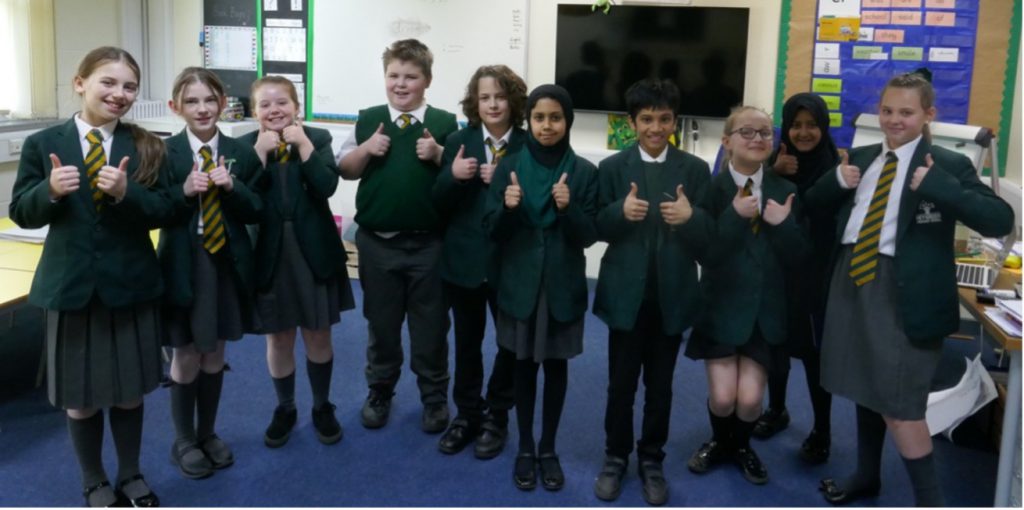
    Learners at Heygreen Primary School. These learners were provided with access to ESB qualifications thanks to the Christabel Burniston Fund


    ESB’s search for 70 centres has already begun. “Being seen and being heard”, is a newly established collaborative project between ESB and RECLAIM, a Manchester-based youth leadership and social change organisation, and one of ESB’s loyal and committed centres. As part of its 70/70 campaign, ESB is funding the role of an ‘Oracy Practitioner’ within RECLAIM to help embed ESB qualifications into their existing programmes.

    Says RECLAIM’s CEO, Roger Harding:

    We are really excited about this partnership with ESB. At RECLAIM, a lot of us come from working class backgrounds ourselves, so we know how hard it can be to take those first steps to speaking out in public and telling your story. Combining what we do, supporting working class people to lead change today and lead the country tomorrow, with the fantastic expertise of ESB, supporting individuals to improve their communication and oracy skills will lead to something really extraordinary. We can’t wait to see what our young people will achieve as a result of it!


    Please watch the video below demonstrating ESB in action.

    Amongst many others, ESB funding has already benefitted children from Manchester’s Plymouth Grove Primary School, a Community School based in Ardwick. At our previous Young Speaker of the Year ceremony, Tina was thrilled to present one of Plymouth Grove’s pupils with a “Spirit of ESB” award in recognition of showing great promise in their assessment.

    Sarah Thompson, Oracy Lead at Plymouth Grove Primary School says:

    The Christabel Burniston Fund has been instrumental in opening up a whole world of opportunities for young speakers at Plymouth Grove Primary School.

    The funding has enabled our children to realise that their voices are important, valuable instruments and essentially the key to their future in our increasingly noisy world. Oracy is now at the forefront of everything we do at Plymouth Grove and ESB has enabled the children to present, read aloud and listen with passion and spirit. All children have been immersed in spoken language and our dialogic classrooms have been enriched and supported by Christabel’s legacy.


    Also benefitting from Christabel Burniston funding are several schools from the Stoke-on-Trent area. ESB’s work in partnership with Stoke’s Education Authority began in 2014 and continues to go from strength to strength. The first initiative was looking at ways of improving oracy in its schools. Impressed with the results of ESB’s pilot projects, the Education Authority agreed to match funds for every school in Stoke wishing to include ESB assessments in their curriculum.

    Thistley Hough Academy is a mixed community secondary school located in the village of Penkhull in Stoke-on-Trent. Passionately believing that every student deserves the highest standard of education, it is one of our longest-standing centres and benefits from the Christabel Burniston Fund.

    Says the Principal, Jayne Schofield:

    ESB gives us a qualification to work towards to really focus on the speaking skills that would doubtless be pushed to the side otherwise. It gives students a platform for airing their views.

    ESB Logo

    Who can apply for funding from the 70/70 campaign?

    Education SectorThird Sector
    Primary Schools
    Secondary Schools
    Further Education
    Special Schools
    Pupil Referral Units
    Prisons   
    Charities
    Community Groups
    Youth or Adult Societies

    How can you apply for funding?

    ESB would like to help and support your young people, learners, community members, children and adults to develop and possess the oracy and English language skills they need to achieve their aspirations. If you are interested in finding out whether your centre is eligible for funding and wish to know the options available to you, please email business@esbuk.org. Additional information on how to apply will also be provided. ESB can’t wait to hear from you!
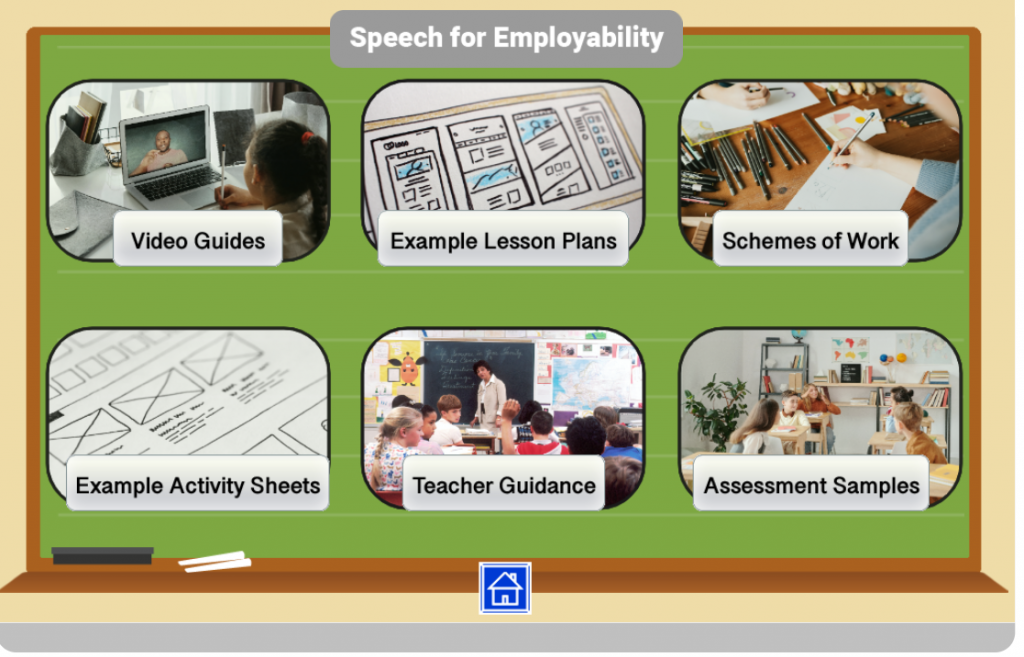
  • ESB launches new online Speech Resource for teachers!

    ESB is delighted to announce the launch of its new online speech resource, now available to centres!

    Steadfast in its determination to continue to offer maximum support to its centres during these challenging times, ESB has been busy behind the scenes working on brand new resources to assist its centres and teachers to successfully embed Oracy skills and knowledge into classroom practice.

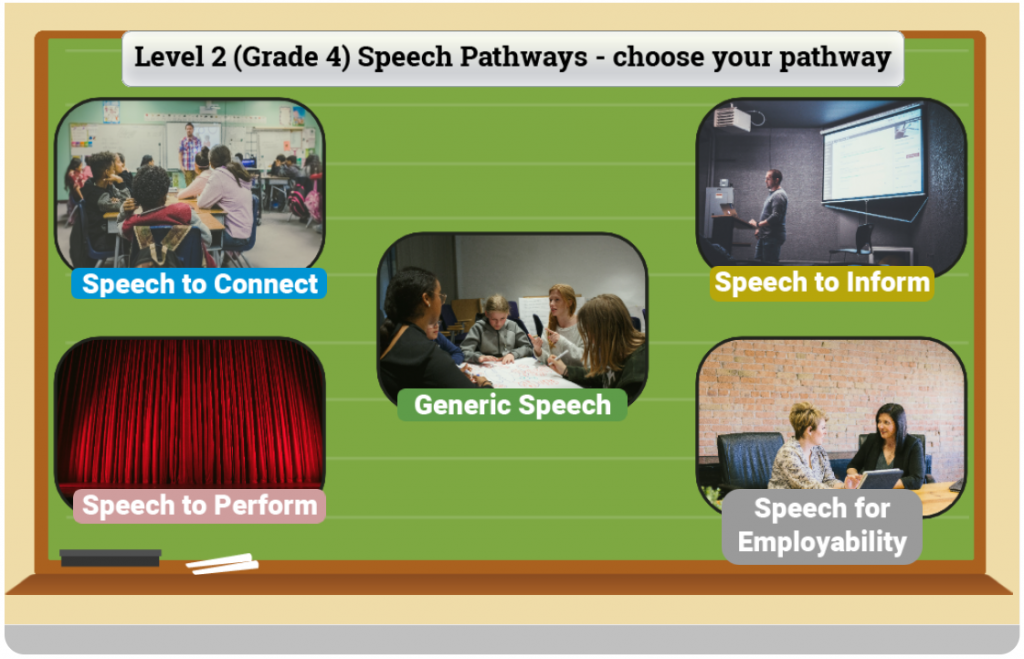
    This library of resources will support centres to effectively deliver ESB Level 2 Certificate in Speech (Grade 4) Pathways Qualifications and includes:

    • Lesson plans
    • Schemes of Work
    • Video Guides from ESB’s Senior Assessor
    • Activity templates
    • Teacher guidance

    If you are an approved ESB Speech centre, you will have received an email explaining how you can access the resources. If you have not received this, please do contact our Product Development Team to request the access details.

    Speech for Employability Resources

    Embedding Oracy into classroom practice and curriculum is something ESB is passionate about.

    Senior Manager Educational Delivery, Ben Jackson, says: “We are constantly looking at ways to improve our teachers, tutors and learners experience. It’s important to us that they get the maximum benefit from ESB with their learners developing valuable oracy skills in an encouraging environment to aid their personal growth and confidence.”

    ESB is always open to centre feedback which is carefully considered by its CEO and Senior Assessors, so, please feel free to provide us with some early feedback about our new resources by emailing product@esbuk.org.

    If you have any questions or issues accessing the resources, again, please email product@esbuk.org.

    At ESB, we believe oracy to be at the heart of the learning experience and our qualifications build confidence in learners, which is key to unlocking learners’ potential and raising achievement, boosting progression and employability.

  • Attention all centres, ESB wants to hear from you!

    ESB International is always looking at ways to improve its service for its centres. The best way to do this is to find out exactly what individual centres want – deliver it where possible – and as a result build customer loyalty and high satisfaction levels. Your honest feedback enables ESB to provide an outstanding customer experience to all. 

    With that in mind, ESB is embarking on a new venture – which will make that process even simpler. You can now share real time feedback and experiences with ESB through the launch of its new Trustpilot Account!

    What you will need to do:

    1. Please follow this link to start your review (you will need to have booked an assessment with us in order to leave a review): https://uk.trustpilot.com/evaluate/esbuk.org
    • You will need to register as a Trustpilot user to leave a review. If you do not already have an account, this will be done automatically.

    ESB values transparency as one of its most defining characteristics and it hopes that this new feature will bring us closer together with our centres and deepen our working relationship. ESB hopes to see a continuation of the many, many positive views that centres already feed back to us on a regular basis and constructive feedback is always welcome. 

    Your input is invaluable to us and will be listened to. Please help to empower positive changes at ESB by leaving your feedback today. Together, we can continue to raise – and celebrate – the achievement of our learners!

    ESB thanks you for your continued and invaluable support.