[Download this document here for offline viewing].
This guidance relates to the following qualifications:
- ESB Entry Level Award in Communicating with Art/ Drama/ Music/ Others (Entry 1)
- ESB Entry Level Award in Developing Independent Communication Skills (Entry 1)
- ESB Entry Level Award in Developing Oral Interview Skills (Entry 2)
- ESB Entry Level Award in First Steps in Communicating with Others (Entry 1)
- ESB Entry Level Award in Independent Communication Skills (Entry 1)
- ESB Entry Level Award in Inspiring Confidence in Employability (Entry 1, 2 and 3)
- ESB Entry Level Award in Introducing Oral Skills for Interviews (Entry 1)
- ESB Entry Level Award in Oral Communication in the Community (Entry 2)
- ESB Entry Level Award in Oral Communication with Others (Entry 1)
- ESB Entry Level Award in Oral Interview Skills (Entry 3)
- ESB Entry Level Award in Preparing for Performing Within a Team (Entry 2)
- ESB Entry Level Award in Reading to a Child (Entry 3)
Introduction
COVID-19 restrictions have led to the cancellation of exams and prevented many assessments from being taken as planned this spring and summer.
Ofqual has designed an approach to ensure, as far as possible, that learners receive results to enable them to progress to the next stage of their lives without further disruption.
In early April, Ofqual opened a consultation on its Extraordinary Regulatory Framework, asking awarding organisations to compile a list of qualifications available for public funding that fell into one of three categories, which were:
- Where the primary use is to progress to FE/HE
- Where there is a mixed use to progress to FE, HE or employment
- Where the primary use is to provide a License to Practise/access to a profession or certificate of occupational competency.
Ofqual also asked awarding organisations to put forward their mitigation approach for each qualification, i.e. how they plan to support learners and centres with getting final results. The options were to
- safely estimate or calculate results to issue to students
- adapt assessments so that they can be taken in different contexts but still safely and validly measuring the same skills, knowledge and understanding
- delay/reschedule (only used as a last resort).
This consultation is now complete and it can be confirmed that ESB International will be calculating results for learners completing SEND qualifications because they have a mixed purpose.
Aims of calculated results
Ofqual has clearly set out the proposed aims of providing calculated results, which are as follows:
- To provide learners with the results that they would have most likely have achieved had they been able to take their assessments in summer 2020.
- To enable the maximum possible number of learners to receive results based on a principled evidence-based approach, such that in similar situations, similar approaches to calculated results would be used.
- To protect, as far as is possible, learners from being systematically advantaged or disadvantaged, notwithstanding their socio-economic background or whether they have a protected characteristic.
- For the methods to be sufficiently transparent and easy to explain to promote confidence.
- To be deliverable by awarding organisations with sufficient oversight from Ofqual.
This document sets out the guidance for centres that plan to calculate results for their learners who are unable to take their assessments in the spring and summer due to the COVID-19 pandemic.
These arrangements apply to learners who were due to take assessments between 20th March and 31st July 2020.
The process
Step 1
E-mail product@esbuk.org confirming your intentions to submit calculated results for your learners.
Step 2
Bookings can be made from Monday, June 8th. Please do not attempt to make a booking prior to this date as the system will not be live.
Create a new booking in the ESB hub and register ALL learners with ESB International whom you intend to calculate results for, including previously cancelled bookings. In choosing a booking date, you are identifying the date when you will be submitting your calculated results. If you have already made a booking that has since been cancelled due to COVID-19, you will need to make this booking again.
Note – As part of its quality assurance process ESB International may also ask centres for learner enrolment evidence. This is because Ofqual expects awarding organisations to carry out due diligence to ensure all non-registered learners are authentic.
Step 3
At the date of your booking, complete and submit to product@esbuk.org the Calculated results for SEND Qualifications spreadsheet (this can be downloaded from the hub when you make your booking), indicating:
- Learner name and ULN
- Calculated result (pass or unsuccessful*)
- Evidence available for audit
*It is important that all learner results are submitted, including those who would have been expected to be unsuccessful. This will allow ESB International to compare overall cohort performance with previous years.
Submissions to product@esbuk.org must be via We transfer, not attachments to an email to manage the security of personal data.
Timing and number of submissions
Centres are not limited to one submission. ESB International is accepting calculated results as per your normal booking pattern. For example, if you had a cancelled booking in March, and a cohort of learners for summer assessments, you may submit separately for these cohorts, at any point between 8th June and 31st July.
Sources of evidence
Centres are required to make available suitable evidence that supports their calculated result decisions, should they be requested by ESB International for quality assurance purposes. We recognise that evidence will vary across centres and there may be some challenges in accessing certain pieces of evidence.
The strength of evidence has been split into three groups, with group A being the strongest and the strength of evidence lessening from group B through to group C. A minimum of one piece of evidence must come from group A or a minimum of two pieces of evidence from group B. Evidence from Group C may be put forward to support the calculation, however it will not be considered without evidence from groups A and/or B.
| Group A |
Group B |
Group C |
| Mock exam results |
Previous achievement of ESB Awards by the learner |
Lesson observations |
| Evidence from formative assessments, e.g. completed assessment checklists and teacher feedback |
Portfolios |
Schemes of work/lesson plans |
| Individual Learning Plans/progress trackers |
Teacher profiles of individual learners |
| Class work/homework or examples of student engagement documented by teachers |
Initial assessments and diagnostic assessments |
|
Evidence of attendance and guided learning hours |
|
Tutor records of curriculum delivery |
Examples of accepted evidence groupings:
Mock exam results (1 x A)
- Teacher profiles of individual learners, portfolios and lesson observations (2 x B and 1 x C
Note – Learner evidence must be made available on request; however, it does not need to be submitted alongside the spreadsheet.
Note – Evidence that has been acquired following the closure of schools on 20th March, through distance learning or other means, will be considered. However, centres must ensure any such work can be authenticated and considered in a consistent manner that improves rather than compromises wider validity, comparability and fairness of judgements. Where additional work has been completed after 20 March, centres should exercise caution where that evidence suggests a change in performance. In many cases this is likely to reflect the circumstances and context in which the work is done.
Minimum evidential threshold
Ofqual requires all awarding organisations to ensure that its approach uses sources of reasonably trusted evidence along with a sufficiently robust basis for quality assurance.
This means that where there is –
- little or no banked component data,
- insufficient trust in information provided by a centre in relation to learners’ likely performance, and
- little opportunity or evidence to undertake quality assurance of that evidence,
ESB International may determine that it is unable to issue a calculated result which has sufficient validity and reliability to meet one or more of the principles of the Extraordinary Regulatory Framework.
In addition to evaluating evidence of a group of learners, ESB International must also consider whether there are some learners, but not others, for whom the available evidence does not meet the minimum threshold.
Centre responsibilities
Judgements
Centres must consider each learner’s performance over the course of study and make a realistic, professional judgement of the result that learner would have been most likely to receive if he or she had completed the relevant component or qualification. This should include unsuccessful outcomes.
This should be a holistic professional judgement, balancing the different sources of evidence, using knowledge of the assessment aims and criteria.
ESB International recognise that teachers will not know precisely how each learner might have performed on assessments and examinations that had not been encountered. However, they will have a good understanding of how learners with similar achievements have performed in the past on the same or similar assessments. They should use this knowledge when coming to their judgements.
Where the centre has no evidence upon which to base a centre assessment result, the centre should not provide a centre assessment result.
Reasonable adjustments and equal opportunities
Centres should also consider the likely impact of any Reasonable Adjustment to which a learner would have had access. For example, if a learner qualifies for extra time in an assessment by examination, in the information it provides in respect of that learner, centres must reflect how it considers the learner would have performed having the full amount of time to which he or she would have been entitled.
More broadly, centres must make any judgements in an impartial, balanced and unbiased way such that, as far as possible, the information provided by them avoids bias and learners are not systematically advantaged or disadvantaged by having or not having a characteristic or special educational need.
Review
The information provided by a centre needs to have been reviewed by both:
(a) subject teachers or assessors, and
(b) the relevant head of department or equivalent or, where there is no person in such a role, the head of centre or equivalent.
Quality assurance
Once ESB International is in receipt of a cohort of calculated results for learners, it will carry out appropriate quality assurance activities, as required to ensure it complies with the principles set out in Ofqual’s Extraordinary Regulatory Framework.
This will always involve:
- A comparison of centre performance with previous years.
This may involve:
- A request for the evidence identified to calculate results.
ESB International may consider the evidence submitted for individual learners, or a group of learners as not strong enough to provide a trusted calculated result.
Where this occurs, ESB International will take one of the following steps:
- Request to the centre for further evidence to support their judgement.
- Rejection of the calculated result.
Results, certificates and invoicing
ESB International will only issue confirmed results once the quality assurance processes have been carried out. Certificates will be issued in accordance with current advertised timeframes.
Invoicing of centres will occur in accordance with current advertised practices.
Appeals
ESB International recognises that learners should have access to a right of appeal if they feel the relevant process was not followed correctly when calculating results for learners.
An appeal should be focused upon whether the process was followed and, where applicable, should not involve second-guessing the judgement of teachers, tutors or trainers, who know their learners best.
Please follow the process set out in ESB International’s Enquiries, Complaints and Appeals Policy for any appeal relating to calculating results for learners.
Contact
If centre staff have any questions on the process or the content of this document, they should put these in writing to product@esbuk.org.
 A Message from our Chief Executive, Tina Renshaw
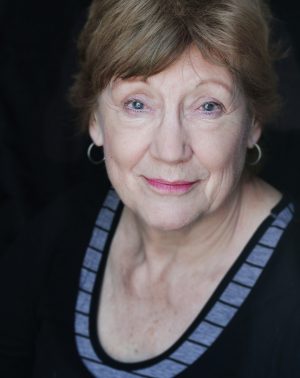 One of English Speaking Board’s longest-standing assessors Joan Blackham has sadly passed away.
 With Covid-19 still bringing many things to a standstill, we are excited to report that ESB International is open for business!