
ESB International’s Unique Oracy Qualifications: Developing Confident Communicators
At English Speaking Board (International) Ltd., we believe that every learner deserves the opportunity to develop their voice, confidence and communication skills to achieve their aspirations at home, in class or at work. Our mainstream oracy qualifications, Graded Examinations in Speech, provide a clear, structured pathway from Early Years through to post-16, and are regulated by Ofqual at Level 1 and above.
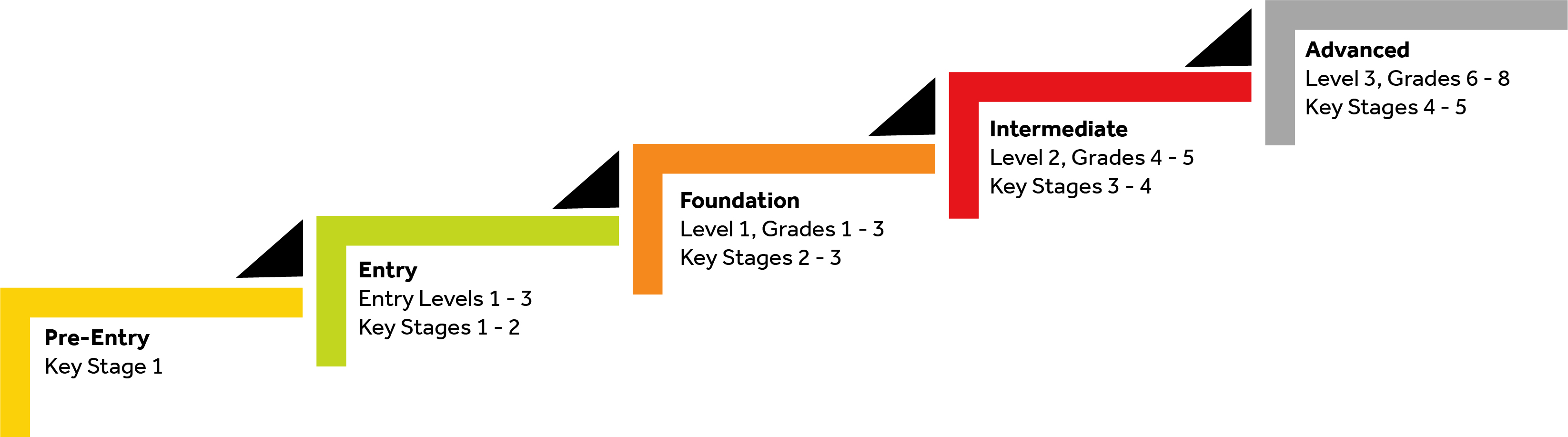
Multilingual learners developing their English as an Additional Language (EAL), or learners who have significant Special Educational Needs and/or Disabilities (SEND) can access unique suites of regulated oracy qualifications. ESB International’s portfolio of oracy qualifications is broad and varied, but they all share a common foundation: they are firmly centred on the learner. Every qualification empowers individuals to make their own choices: from selecting topics, reading materials and discussion points, to shaping how they present their ideas. This learner-centred approach not only promotes agency and ownership but also ensures that the assessment itself is an engaging, enjoyable and confidence-building experience.
Please see the tables below for an introduction to our oracy qualification suites. For in-depth information, please refer to the relevant qualification specifications available below.
Oracy Qualifications for Primary Learners
Mainstream Primary Oracy Qualifications
Our primary qualifications introduce learners to the joy of spoken language. They provide a safe, encouraging environment for young learners to share ideas and explore literature. Our assessments encourage learners to engage with oracy authentically using their individuality, boosting confidence, a love for reading and collaboration with peers. Our qualifications have been designed with universal principles, ensuring they are accessible to all primary learners regardless of background or prior attainment. Reasonable Adjustments can be requested so that every child can participate alongside their peers and demonstrate their skills without disadvantage.
| Qualification | Accredited? | Level / Key Stage | Specification | Resources |
|---|---|---|---|---|
| ESB Early Steps: Step 1 (Speaking Together) | No | EYFS |  |  |
| ESB Early Steps: Step 2 (Speaking Out) | No | EYFS | | |
| ESB Pre-Entry Level Award in Speech | No | EYFS / Key Stage 1 | | |
| ESB Entry Level Award in Speech (Entry 1) | No | Key Stage 1 – 2 | | |
| ESB Entry Level Award in Speech (Entry 2) | No | Key Stage 1 – 2 | | |
| ESB Entry Level Award in Speech (Entry 3) | No | Key Stage 1 – 2 | | |
| ESB Level 1 Award in Speech (Grade 1) | Yes | Key Stage 2 – 3 | | |
Assessment Format
Learners prepare and deliver short spoken tasks such as a structured talk, poetry or prose recitation and reading aloud a passage from a book of their choosing. Assessments take place in small groups, with each learner individually assessed on their talks as well as on their listening via their questions and feedback for their peers by an external ESB International assessor. The group setting promotes collaboration and active listening skills.
Skills Developed
Through these qualifications, learners build confidence in speaking to an audience, develop clear expression and vocal techniques, and learn the importance of active listening and respectful dialogue. They also begin to acquire early research and preparation skills that will serve them well as they progress through school.
Qualification Outcomes
These qualifications build a strong foundation in spoken communication and literacy. Despite most of our mainstream primary qualifications being unregulated, learners are still assessed by an external assessor from ESB International and receive a certificate following a successful pass, lending added validation to the learning your learners have done and the skills they have acquired. For many primary learners, this will be their first experience of being assessed by an external assessor, excellent preparation for their academic journey.
Qualifications for Learners with EAL
Our Graded Examinations in Speech qualifications for multilingual/EAL learners are designed to reference the descriptions of language proficiency at A1, A2 and B1 in the Common European Framework Reference for Languages (CEFR). These qualifications are for learners who are beginning their oracy journey but understandably do not have the same level of English language proficiency as their class peers. Our flexible assessments can comfortably cater for assessing a cohort where a small number, or even just one learner, are more suited taking an EAL Graded Examinations in Speech qualification whilst the rest of the cohort takes the non-EAL equivalent.
| Qualification | Accredited? | Level / Key Stage | Specification | Resources |
|---|---|---|---|---|
| Graded Examinations in Speech (Entry 1) (EAL-A1) | Yes | Key Stage 1 – 2 | | |
| Graded Examinations in Speech (Entry 2) (EAL-A2) | Yes | Key Stage 1 – 2 | | |
| Graded Examinations in Speech (Entry 3) (EAL-B1) | Yes | Key Stage 1 – 2 | | |
Assessment Format
Structured talk about a topic of personal interest encourages learners to practise spoken English in a safe and supportive setting. The assessment also includes reading a passage from their favourite book of choice along with a spoken-by-heart reading of a piece of poetry or prose of their choosing.
Skills Developed
Vocabulary building, pronunciation, conversational English, reading, recitation and confidence in speaking to different audiences.
Qualification Outcomes
Learners take away foundational skills allowing for increased access to the wider curriculum, build friendships and participate more fully in school life. Learners achieve an Ofqual-accredited certificate following a successful pass, representing a fantastic milestone in their formative educational journey as they continue to build their language skills.
Qualifications for Groups of Primary Learners
Our Group Speaking assessments focus on teamwork and collaborative communication. Learners prepare and deliver spoken tasks as a group, encouraging collective responsibility and shared success. Learners are assessed in groups (a minimum of 6), and we encourage groups of range of different ages and abilities. Our Group Speaking assessments are the ideal way for young people to explore verse and prose in a fun, imaginative and collaborative setting.
| Qualification | Accredited? | Level / Key Stage | Specification | Resources |
|---|---|---|---|---|
| ESB Entry Level Award in Group Speaking (Entry 2) | Yes | Key Stage 2 * | | |
| ESB Entry Level Award in Group Speaking (Entry 3) | Yes | Key Stage 2 ** | | |
** Recommended Year 2 – 5
Assessment Format
Learners work in small groups to share ideas, present short pieces, and respond to each other in discussion. Assessments are carried out by an external ESB International assessor at your own centre.
Skills Developed
Learners build confidence in expressing themselves, listening actively, and respecting different viewpoints. They learn to take turns, contribute meaningfully, and collaborate effectively, essential skills for classroom learning and beyond.
Qualification Outcomes
Each learner receives a recognised ESB International certificate and develops foundational speaking and listening skills that support literacy, social development, and future progression.
Oracy Qualifications for Secondary Learners
Mainstream Secondary Oracy Qualifications
At secondary level, learners deepen their ability to present ideas, interpret literature and engage in meaningful discussion. These qualifications are regulated by Ofqual, providing learners at secondary level with the opportunity to differentiate themselves with a professional qualification that will help them stand out when applying for further education or work experience. Our Speech Pathways options, available at Level 1 and Level 2 (GCSE level), are a great choice for a classroom with diverse interests, with learners able to choose a qualification between our Speech to Connect, Speech to Inform, Speech to Perform or Speech for Employability that most aligns with their personality and ambitions.
Accessibility remains at the heart of our Secondary qualifications which, like our Primary offerings, have been designed with universal principles. To maintain fairness, we offer Reasonable Adjustments where required, so that no learner is disadvantaged during assessment. Our commitment to inclusion enables all learners to demonstrate their ability to speak, listen and engage effectively, supporting both academic success and personal growth.
| Qualification | Accredited? | Level / Key Stage | Specification | Resources |
|---|---|---|---|---|
| ESB Level 1 Award in Speech (Grade 2) * | Yes | Key Stage 3 | | |
| ESB Level 1 Award in Speech (Grade 3) | Yes | Key Stage 3 | | |
| ESB Level 2 Certificate in Speech (Grade 4) * | Yes | Key Stage 3 – 4 | | |
| ESB Level 2 Certificate in Speech (Grade 5a) Drama Focus | Yes | Key Stage 3 – 4 | | |
| ESB Level 2 Certificate in Speech (Grade 5b) Presentation Focus | Yes | Key Stage 3 – 4 | | |
Assessment Format
Assessments across our secondary oracy qualifications can vary, especially between pathways and at Level 2 Grade 5 which includes options that focus on either drama or presenting. All qualifications are built on the principle of learner choice and are individually assessed by an external ESB International assessor. At these levels, learners are encouraged to engage actively by offering feedback and asking questions of their peers, as listening and interaction form an integral part of the assessment.
Skills Developed
Learners at this stage refine advanced speech techniques and vocal control, develop critical thinking and analysis of texts, and gain confidence in presenting to peers. They also strengthen collaborative engagement and listening skills, promoting greater attainment at GCSE level and beyond.
Qualification Outcomes
On completion, learners receive an Ofqual-regulated ESB International certificate that demonstrates the transferable skills they have acquired, boosting academic achievement. The Speech for Employability pathway in particular is an excellent choice to engage secondary learners with the world of work. The ability to communicate is often the most desirable skill outside of role-specific technical skills that hiring managers look for, yet 70% of employers feel that the ability to communicate and collaborate effectively with colleagues is a significant skills gap amongst young people. Our qualifications, therefore, give young people a competitive advantage amongst their peers.
Qualifications for Groups of Secondary Learners
At secondary level, our Level 1 Group Speaking qualification helps learners develop more structured and purposeful communication skills. This qualification is regulated by Ofqual, ensuring it meets national standards and supports academic progression, and can also be taken by a primary cohort at Key Stage 2 at a class teacher’s discretion.
| Qualification | Accredited? | Level / Key Stage | Specification | Resources |
|---|---|---|---|---|
| ESB Level 1 Award in Group Speaking | Yes | Key Stage 2 – 3* | | |
Assessment Format
Learners participate in a group discussion, present ideas clearly, and respond thoughtfully to others. Assessments are externally conducted by ESB International at your own centre.
Skills Developed
Learners refine their ability to articulate opinions, justify viewpoints, and engage in collaborative dialogue. They also strengthen listening skills and learn to adapt their communication for different audiences and contexts.
Qualification Outcomes
Learners receive the same result based on the performance of the group, although all learners receive an individual Ofqual-regulated ESB International certificate. Learners gain transferable skills such as critical thinking, teamwork, and confidence, preparing them for further study and life beyond school.
Qualifications for Secondary Debating
Debating is one of the most dynamic ways for learners to grow in confidence, sharpen their thinking, and learn to communicate with conviction. At secondary level, our Debating qualifications focus on developing independence and sophistication in argumentation. Available at Level 1 and Level 2, these specialised oracy qualifications build on foundational skills while introducing more complex motions, such as building and delivering arguments, managing timing, signposting and recalling on research.
| Qualification | Accredited? | Level / Key Stage | Specification | Resources |
|---|---|---|---|---|
| ESB Level 1 Award in Debating | Yes | Key Stage 3 | | |
| ESB Level 2 Award in Debating | Yes | Key Stage 3 – 4 | | |
Assessment Format
These assessments take place in groups of 3 or 4 over approximately 30-40 minutes. Teams prepare a debate on an agreed motion (own choice) and each member of the team has 4 minutes to build and deliver arguments that support or oppose the motion.
Skills Developed
At Level 1 (Years 6–8), learners build confidence in structuring and presenting arguments, develop respect for different viewpoints, and begin to think critically in real-time. At Level 2 (Years 9–11), skills deepen through more complex motions, with learners refining their style, analytical ability, and teamwork while learning to debate with greater independence.
Qualification Outcomes
Learners achieve a regulated qualification from ESB International and gain transferable skills such as collaboration, leadership, and critical thinking, strengthening academic progression and confidence for future study.
Oracy Qualifications for Post 16 Learners
Mainstream Post 16 Oracy Qualifications
Our Level 3 qualifications challenge learners to demonstrate their intellectual maturity and ability to communicate fluently, preparing them for higher education and a career. Our oracy qualifications complement a range of post 16 contexts, including core/extra-curricular learning at Year 12-13, a high-quality component of an English GCSE resit pathway or as a potential add-on to upcoming V Levels, enabling your college to blend a vocational offering with in-demand oracy skills.
| Qualification | Accredited? | Level / Key Stage | Specification | Resources |
|---|---|---|---|---|
| ESB Level 3 Certificate in Speech (Grade 6) | Yes | Key Stage 5 / Post 16 | | |
| ESB Level 3 Certificate in Speech (Grade 8) | Yes | Key Stage 5 / Post 16 | | |
Assessment Format
Learners present a sophisticated talk, interpret and analyse literature, and recommend texts with critical insight. Group assessments encourage discussion and engagement, while individual assessment by an ESB International assessor ensures rigorous standards.
Skills Developed
At this level, learners develop persuasive reasoning and nuanced interpretation, alongside research and independent preparation skills. They learn to communicate confidently and structure their ideas with clarity, while also listening and responding at an advanced level. These skills are essential for learners on the cusp of adulthood, with nearly half of young people not in education or training (NEET) lacking confidence in public speaking or leadership scenarios.
Qualification Outcomes
At Level 3, learners can achieve UCAS Points – making them an excellent choice at Years 12 and 13 to enrich your classes or as an extra-curricular programme. Our Level 3 (Grade 8) qualification has a higher points threshold than an Extended Project qualification (EPQ). Furthermore, if you have any of the 73,000 learners who take English GCSE at post 16, our Level 2 (Grade 4) Speech for Employability qualification is an excellent choice for colleges looking to improve on just the 13% of learners who improve to a pass when resitting this qualification.
With the Government prioritising employability skills, learner wellbeing and clear progression routes, an ESB International oracy qualification can bridge the academic and vocational gap by imparting confidence, leadership and employability qualities onto young people whose world becomes increasingly polarised by social media and artificial intelligence.
Qualifications for Post 16 Debating
Debating at post 16 level offers learners the opportunity to demonstrate advanced communication skills and intellectual maturity. Our Level 3 Debating qualification has been designed to rigorously assess a learner’s ability to lead a well-researched argument and respond with valid rebuttals. This qualification also carries UCAS points, giving learners a clear advantage in higher education applications.
| Qualification | Accredited? | Level / Key Stage | Specification | Resources |
|---|---|---|---|---|
| ESB Level 3 Award in Debating | Yes | Key Stage 5 | | |
Assessment Format
The assessment takes place in groups of 3 or 4 over approximately 50 minutes. Teams prepare a debate on an agreed motion (own choice) and each member of the team has 5 minutes to build and deliver arguments that support or oppose the motion.
Skills Developed
Learners demonstrate higher-order skills such as persuasive reasoning, nuanced rebuttal, and confident, structured communication. They learn to think critically under pressure and articulate complex ideas with clarity and conviction.
Qualification Outcomes
Learners achieve a recognised ESB International certificate and gain transferable skills such as collaboration, leadership, and critical thinking, strengthening academic progression and confidence for future study.
Available UCAS Tariff Points for our Level 3 Oracy Qualifications
| Qualification | Pass / Good Pass | Merit / Merit Plus | Distinction |
|---|---|---|---|
| ESB Level 3 Award in Debating | 4 | 8 | 12 |
| ESB Level 3 Certificate in Speech (Grade 6) | 8 | 10 | 12 |
| ESB Level 3 Certificate in Speech (Grade 8) | 24 | 27 | 30 |
Qualifications for Learners 16 and over with Significant Learning Needs (SEND)
Our Building Confidence in Communication qualifications are specifically designed for learners with significant Special Educational Needs and Disabilities (SEND), often learning in specialist settings, ensuring that every learner has the opportunity to develop their voice, however that voice may be expressed. ESB International believes in oracy for all, so these qualifications are fully accessible and can be completed by learners who are non-verbal and those who rely on assistive technology.
| Qualification | Accredited? | Level / Key Stage | Specification | Resources |
|---|---|---|---|---|
| ESB Entry Level Award in Developing Independent Communication Skills (Entry 1) | Yes | Entry 1 | | |
| ESB Entry Level Award in First Steps in Communicating with Others (Entry 1) | Yes | Entry 1 | | |
| ESB Entry Level Award in Communicating with Others (Entry 1) | Yes | Entry 1 | | |
| ESB Entry Level Award in Independent Communication Skills (Entry 1) | Yes | Entry 1 | | |
| ESB Entry Level Award in Oral Communication with Others (Entry 1) | Yes | Entry 1 | | |
| ESB Entry Level Award in Oral Communication in the Community (Entry 2) | Yes | Entry 2 | | |
| ESB Entry Level Award in Reading to a Child (Entry 3) | Yes | Entry 3 | | |
| ESB Entry Level Award in Communicating with Art (Entry 1) | Yes | Entry 1 | | |
| ESB Entry Level Award in Communicating with Music (Entry 1) | Yes | Entry 1 | | |
| ESB Entry Level Award in Communicating with Drama (Entry 1) | Yes | Entry 1 | | |
| ESB Entry Level Award in Preparing for Performing within a Team (Entry 2) | Yes | Entry 2 | | |
| ESB Entry Level Award in Introducing Oral Interview Skills (Entry 1) | Yes | Entry 1 | | |
| ESB Entry Level Award in Developing Oral Interview Skills (Entry 2) | Yes | Entry 2 | | |
| ESB Entry Level Award in Oral Interview Skills (Entry 3) | Yes | Entry 3 | | |
| ESB Entry Level Award in Inspiring Confidence in Employability (Entry 1) | Yes | Entry 1 | | |
| ESB Entry Level Award in Inspiring Confidence in Employability (Entry 2) | Yes | Entry 2 | | |
| ESB Entry Level Award in Inspiring Confidence in Employability (Entry 3) | Yes | Entry 3 | | |
Assessment Format
The central aim of these qualifications is to build the communication skills that foster greater independence. Whether through verbal or non-verbal expression, learners are supported to develop skills that help them to make choices, express preferences, share their thoughts and feelings, and engage with others in a meaningful way.
Skills Developed
ESB International’s Building Confidence in Communication portfolio is designed to meet learners where they are, celebrating their individuality and giving them the freedom to choose how they express themselves. Whether through everyday interactions, creativity or preparation for the workplace – every qualification nurtures confidence while supporting independence.
Communication for Independent Living and Social Interaction: Learners develop the practical communication skills needed to take part in day-to-day life and build positive relationships. This includes expressing preferences and choices, sharing feelings, responding to questions, and interacting confidently in social situations. These skills underpin greater independence and enable learners to engage more fully with their community.
Communication via the Arts: By exploring poetry, storytelling, drama, music, and visual prompts, learners are given the opportunity to use creativity as a medium for self-expression. This strand encourages individuals to present their own ideas and interpretations, developing confidence, imagination, and personal voice. It also provides a supportive environment where learners can celebrate their interests and showcase their individuality.
Communication for Interviews and the Workplace: This strand prepares learners with the communication skills needed for life after education, from taking part in mock interviews to practising workplace interactions. Skills include following instructions, giving short presentations, listening and responding appropriately, and contributing to group discussions. With a strong focus on employability, these qualifications help learners build the confidence to transition into the workplace, supported by practical skills that employers value highly.
Qualification Outcomes
Learners completing these qualifications achieve an accredited ESB certificate that recognises their progress and success. More importantly, they gain the tools to live with greater independence and confidence — skills that extend far beyond the classroom and into everyday life. In 2024, the disability employment rate was just 53.1%, compared to 81.6% of non-disabled people. ESB International looks to tackle the underrepresentation of disabled people through our Inspiring Confidence in Employability (ICE) qualifications, which help bridge the gap from classroom to workplace by providing practical opportunities to develop workplace-related communication.
Start your Journey with ESB International today
Across our entire oracy qualification portfolio, there is a clear and consistent foundation: they are learner-centred, designed to give individuals autonomy and choice in their topics, reading and discussion points. Every assessment is crafted to be enjoyable and confidence-building, while Reasonable Adjustments and inclusive ethos ensure that oracy opportunities are available to all. Most importantly, our qualifications provide a structured pathway that develops progressively as learners grow, from Early Years to adulthood, always building on prior skills and celebrating individuality.
Whatever the stage, ESB International equips learners with the skills they need to find their voice, express themselves with confidence, and prepare for the next step in their educational or professional journey.
Ready to start your journey with ESB International? Contact us today if you would like to find out more about our unique oracy qualifications or build a tailored quote if you are ready to explore how ESB International can support your learners.
Find out more about our unique Oracy offering:
What is Oracy?
The importance of Speaking and Listening Skills

Embedding Oracy in the Classroom
proven results with ESB International

Oracy Resources and Workshops
tools for teachers and learners
